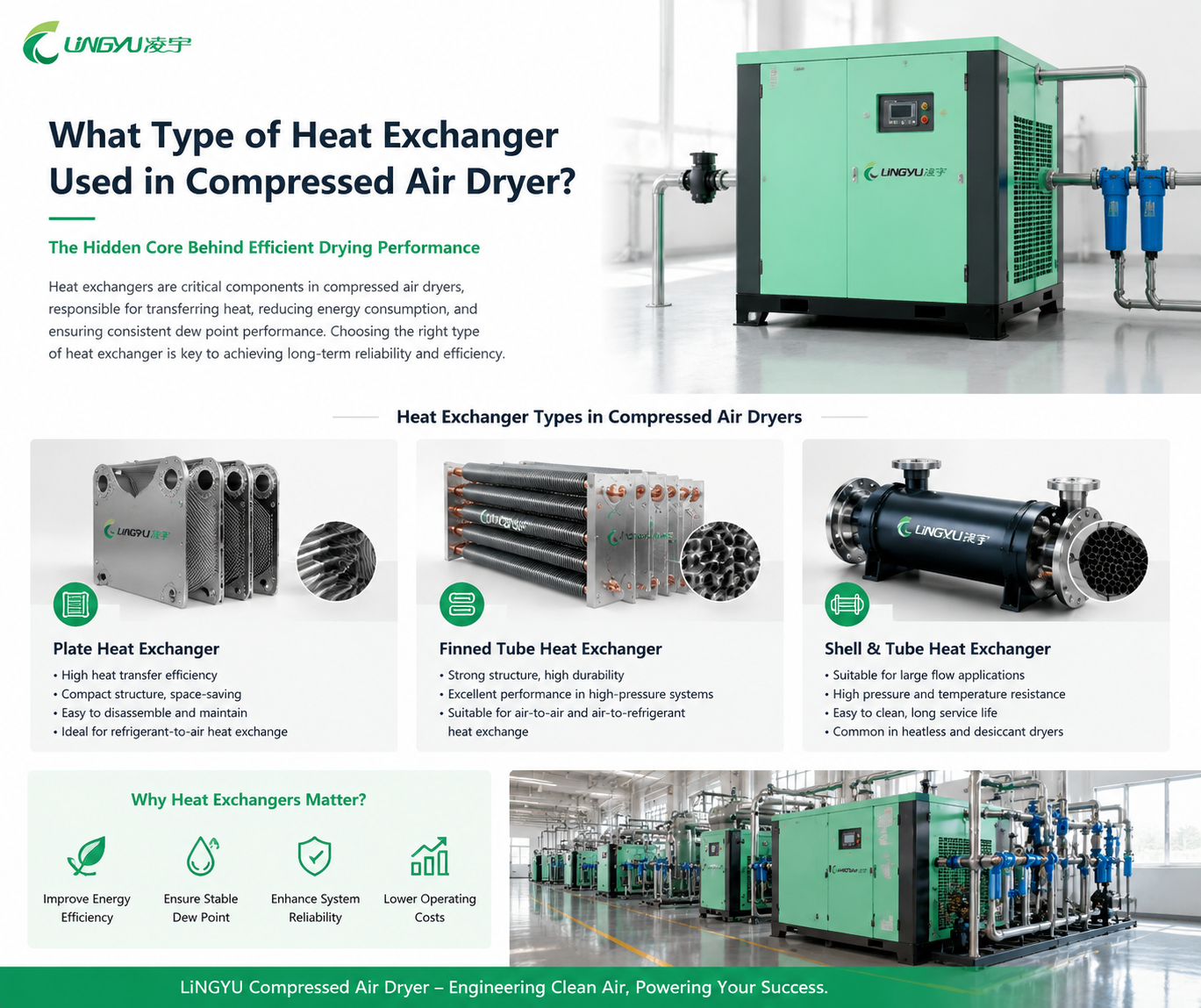
Compressed air is the backbone of modern industrial operations across the Middle East. From powering pneumatic tools in automotive workshops to running heavy machinery in oil and gas facilities, electronics plants, and food processing units, compressed air systems are indispensable. However, the region’s high temperatures and humidity levels can accelerate moisture accumulation in compressed air systems, leading to corrosion, rust, contamination, equipment damage, reduced efficiency, and increased maintenance costs.
Industrial air dryers are designed to eliminate this problem, providing clean, dry, and reliable compressed air. They protect equipment, enhance productivity, and ensure consistent operational performance even under demanding conditions.
What Are Industrial Air Dryers?
Industrial air dryers remove water vapor and contaminants from compressed air. When air is compressed, its relative humidity increases, causing moisture to accumulate inside pipes and machinery. If untreated, this moisture can lead to:
- Rust and corrosion in pipelines, tanks, and machinery
- Shortened lifespan of pneumatic tools and industrial equipment
- Contamination of sensitive production processes
- Increased downtime and maintenance costs
By removing moisture, industrial air dryers protect equipment, improve air quality, and optimize system efficiency, which is especially crucial in Middle Eastern industries facing harsh operating conditions.
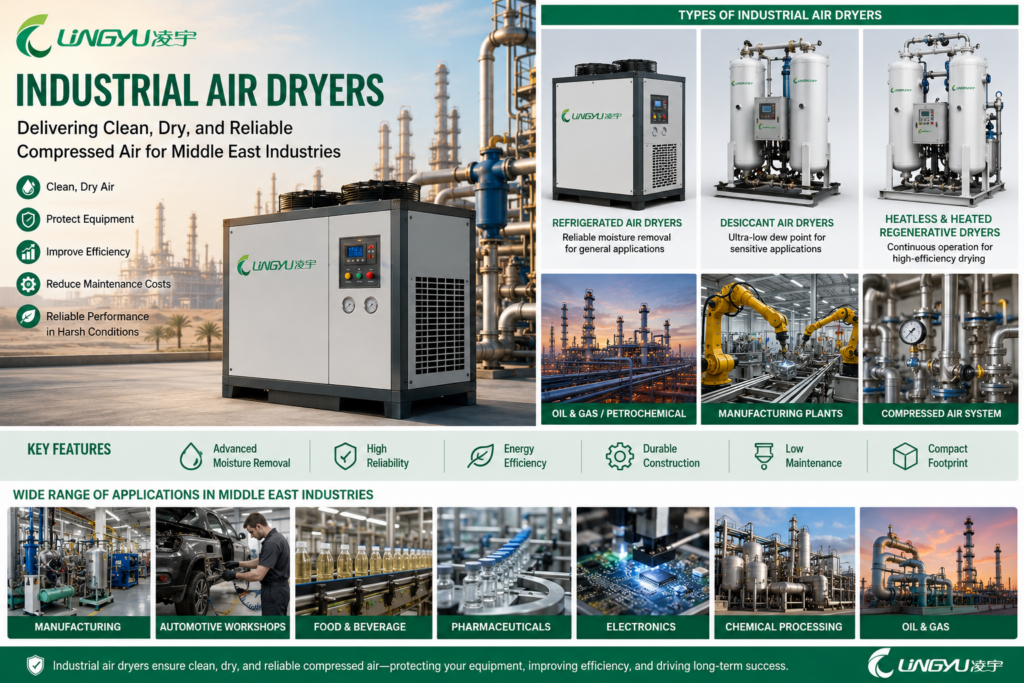
Types of Industrial Air Dryers
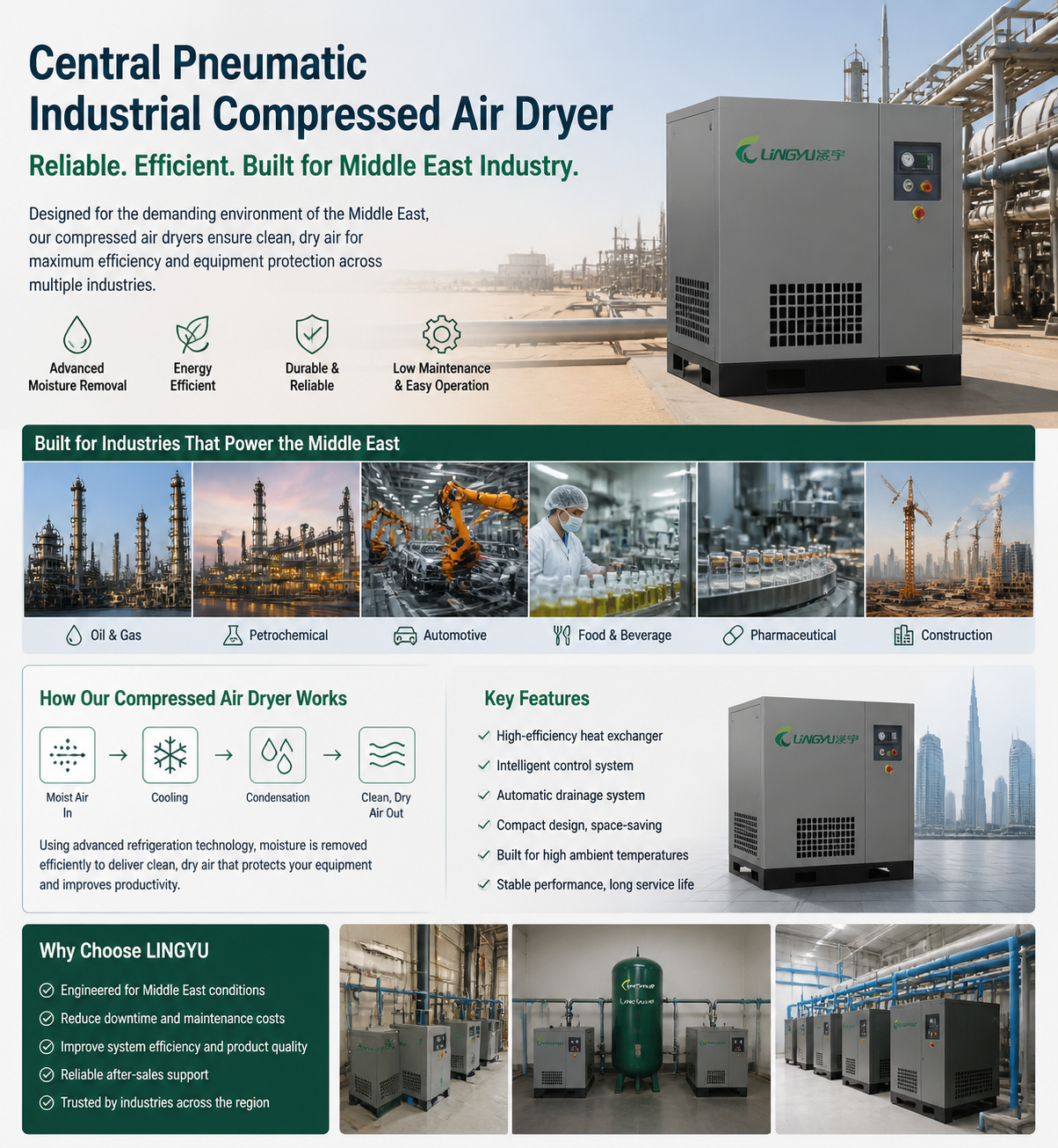
- Refrigerated Air Dryers
Refrigerated dryers cool compressed air to condense water vapor into liquid, which is then automatically drained.
Advantages:- Reliable moisture removal for most industrial applications
- Moderate operating costs
- Compact design for small to medium-sized systems
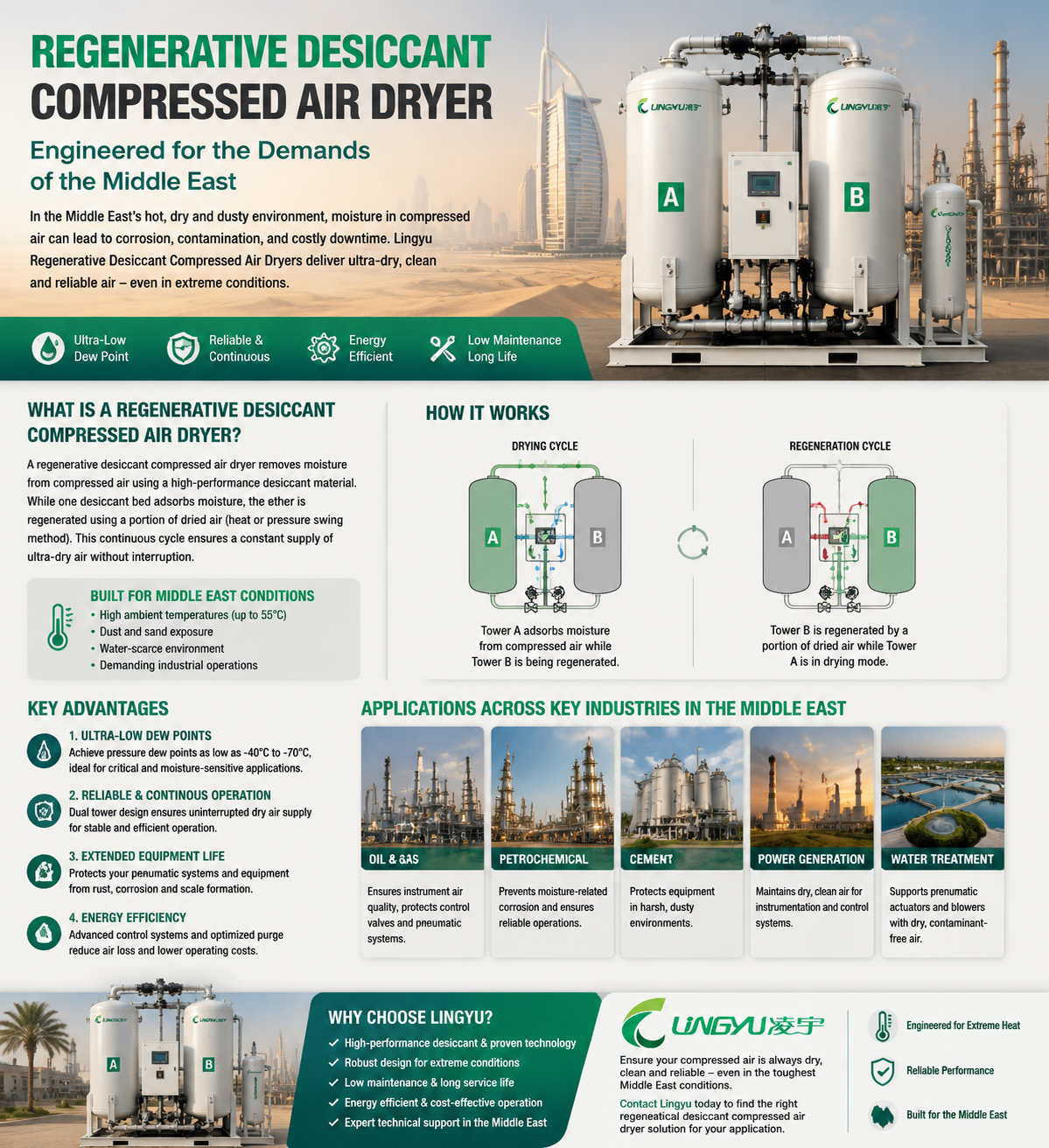
- Desiccant Air Dryers
These dryers use highly absorbent materials, such as silica gel or activated alumina, to remove moisture for ultra-low dew points (often below -40°F / -40°C).
Advantages:- Extremely dry air for sensitive processes
- Ideal for electronics, pharmaceuticals, and food production
- Available in heatless, heated, or blower-assisted regeneration types
- Heatless and Heated Regenerative Dryers
Advanced desiccant dryers regenerate the drying material using ambient air (heatless) or controlled heat (heated), enabling continuous operation without downtime.
Advantages:- Continuous, high-efficiency drying
- Minimal disruption to production
- Suitable for large-scale or critical industrial processes
Key Features of Industrial Air Dryers
- Advanced Moisture Removal: Maintain low dew points to ensure compressed air is free from water vapor.
- High Reliability: Perform consistently under high pressure and varying flow rates, even in extreme heat.
- Energy Efficiency: Modern designs reduce power consumption without sacrificing performance.
- Durable Construction: Built to withstand harsh factory conditions common in the Middle East.
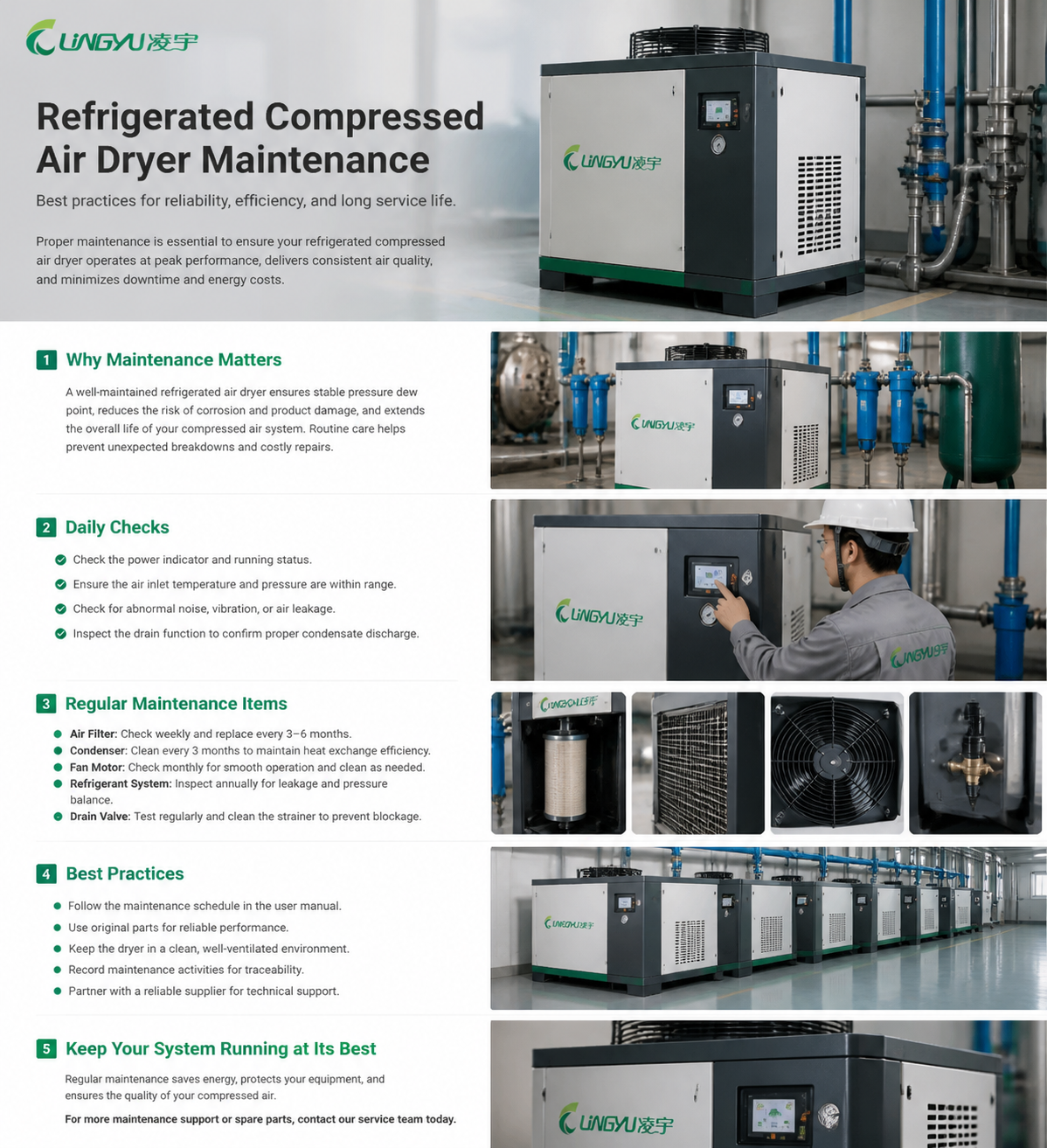
- Low Maintenance: Features like automatic condensate drains and easy-access filters minimize downtime.
- Compact Footprint: Efficient designs fit into existing compressed air systems without taking excessive space.
Benefits of Using Industrial Air Dryers
- Protect Equipment from Corrosion: Keeps pipelines, valves, and machinery free from rust and scale.
- Increase Operational Efficiency: Ensures pneumatic tools and machinery perform at peak efficiency.
- Enhance Product Quality: Critical for food processing, pharmaceuticals, and electronics where moisture can compromise quality.
- Reduce Maintenance and Operating Costs: Fewer repairs, less energy use, and minimized downtime.
- Adaptable to Any Industry: Ideal for manufacturing, automotive workshops, oil & gas, chemical processing, food & beverage, pharmaceuticals, and electronics.
Applications in Middle East Industries
- Manufacturing Plants: Keeps machinery and pneumatic tools running smoothly.
- Automotive Workshops: Prevents rust, extending the life of compressed-air tools.
- Food & Beverage Industry: Ensures hygiene and consistent product quality.
- Pharmaceutical Production: Prevents moisture contamination in sensitive processes.
- Electronics Manufacturing: Protects delicate components from moisture damage.
- Chemical Processing: Maintains precise air quality for accurate operations.
- Oil & Gas and Petrochemical Facilities: Critical for reliable operation of pneumatic systems in high-temperature and humid environments.
Why Choose Industrial Air Dryers?
Moisture is a silent threat to industrial operations. By investing in high-quality industrial air dryers, businesses in the Middle East can:
- Extend the life of compressed air systems
- Reduce maintenance and downtime
- Improve operational efficiency and productivity
- Protect sensitive products and processes
- Reduce long-term operational costs
An industrial air dryer is more than a moisture-removal device—it is a strategic investment in reliability, product quality, and operational excellence.
Conclusion
For industries across the Middle East, maintaining clean, dry, and reliable compressed air is essential. Industrial air dryers prevent moisture-related problems, improve efficiency, reduce maintenance costs, and safeguard sensitive equipment and processes. Whether a refrigerated dryer is needed for general applications or a desiccant dryer for ultra-dry air requirements, choosing the right industrial air dryer ensures consistent product quality, enhanced productivity, and long-term operational reliability.
For more information about industrial air dryers and solutions tailored to Middle Eastern operations, explore our product range or contact our team today.