In the maritime industry, safety, efficiency, and reliability are essential. Ships and offshore systems operate in demanding environments where space is limited, logistics are complex, and equipment must perform continuously under harsh conditions. In these conditions, nitrogen generators for marine applications have become an increasingly important solution for vessels, offshore platforms, and marine support systems.
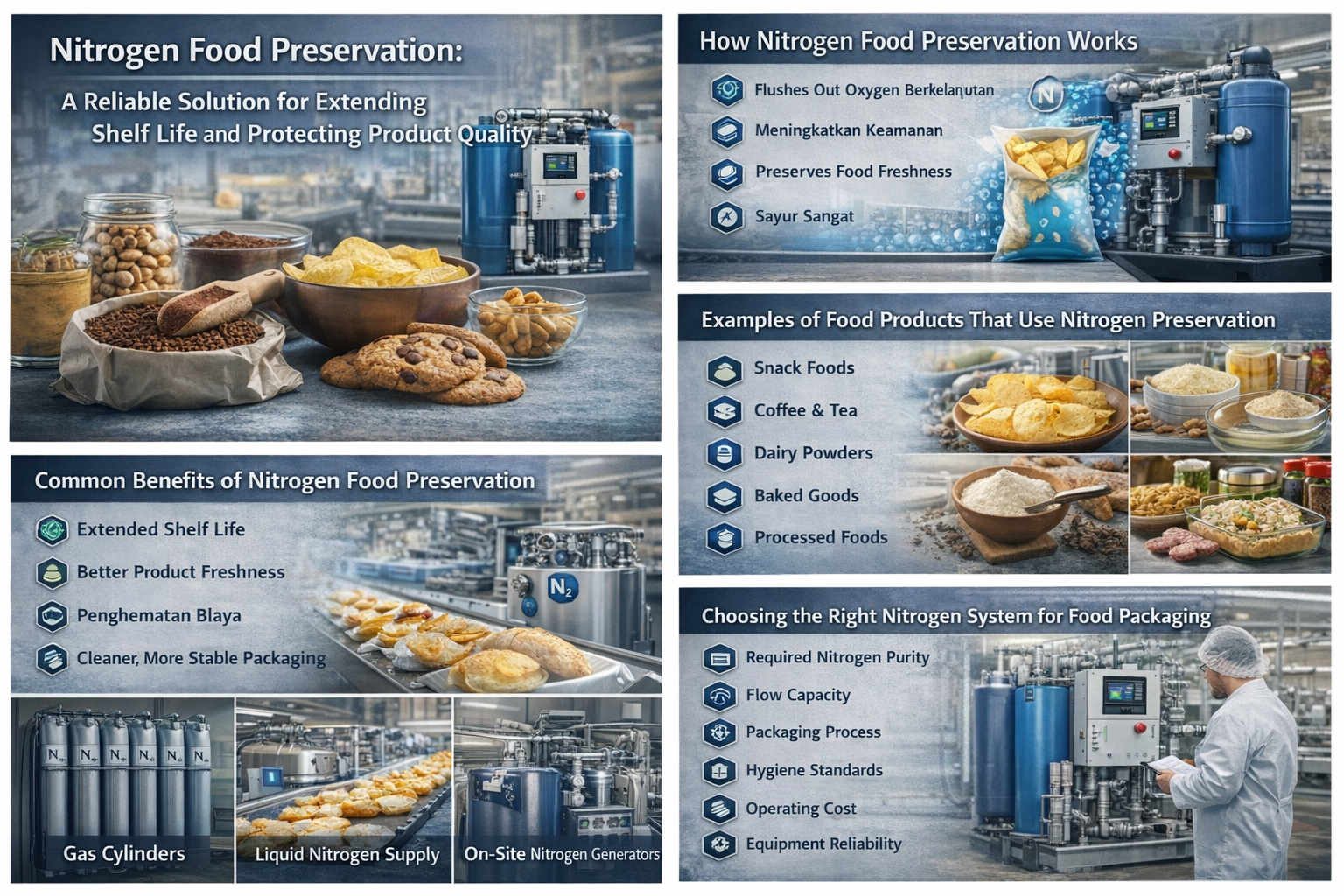
Nitrogen is widely used on board for tank inerting, fire prevention, pipeline purging, pressure maintenance, and protection of sensitive equipment or stored materials. Traditionally, nitrogen could be supplied through cylinders or liquid nitrogen deliveries, but these methods are often less practical in marine environments due to storage limitations, supply dependence, and operational inconvenience.
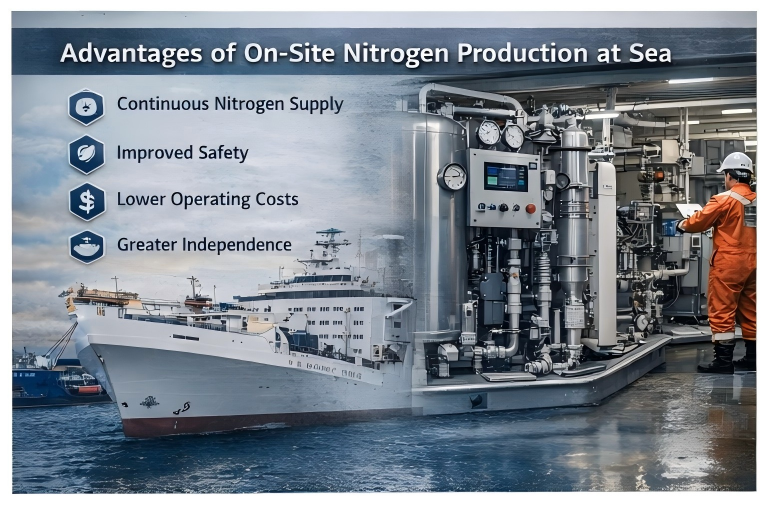
This is why many operators now prefer marine nitrogen generators. By producing nitrogen directly on board, these systems provide a continuous and dependable nitrogen supply whenever and wherever it is needed.
What Are Marine Nitrogen Generators?
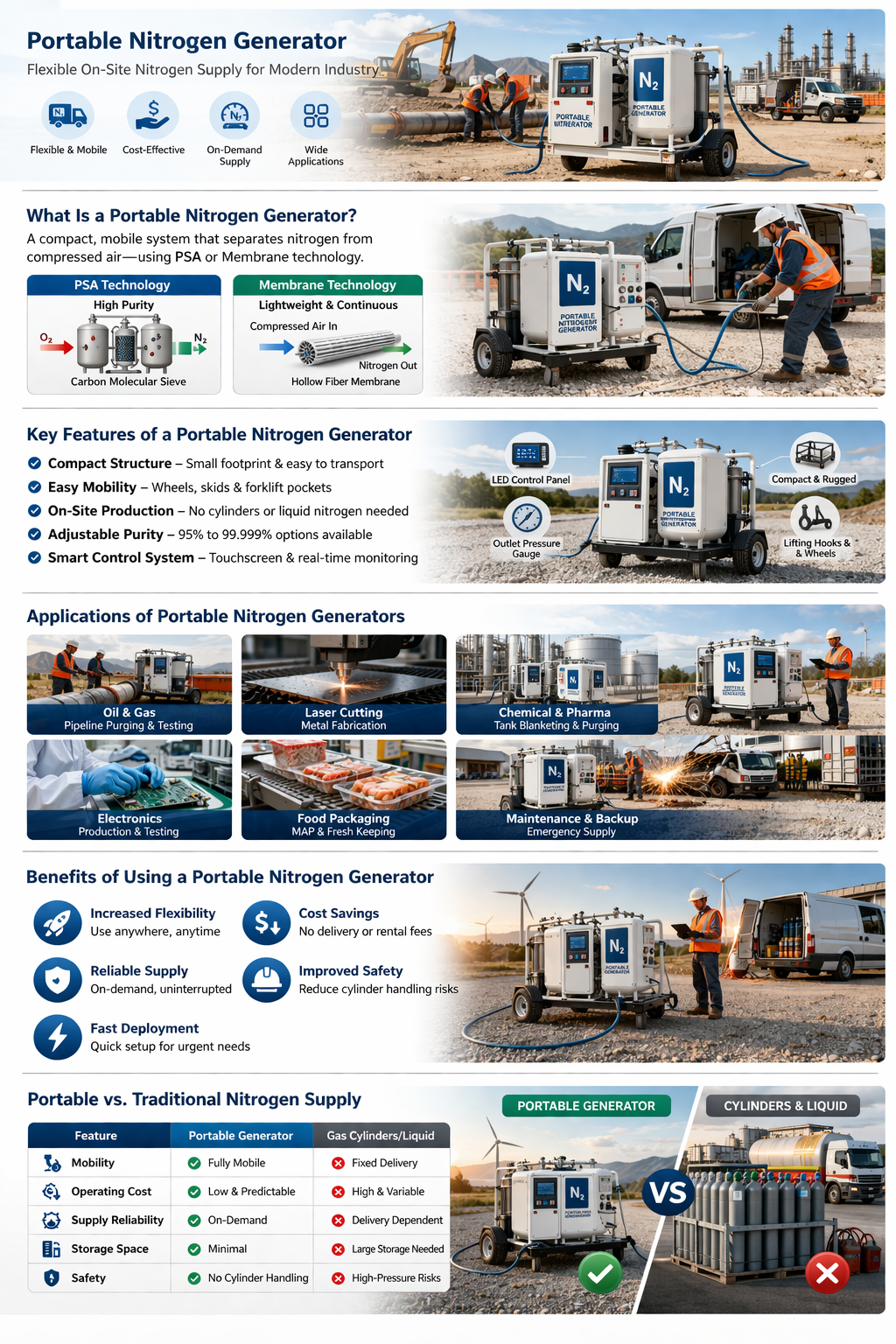
Marine nitrogen generators are on-site gas generation systems designed to produce nitrogen from compressed air for use in marine and offshore environments. They are typically installed on ships, offshore platforms, floating production units, or other maritime facilities where an independent nitrogen source is required.
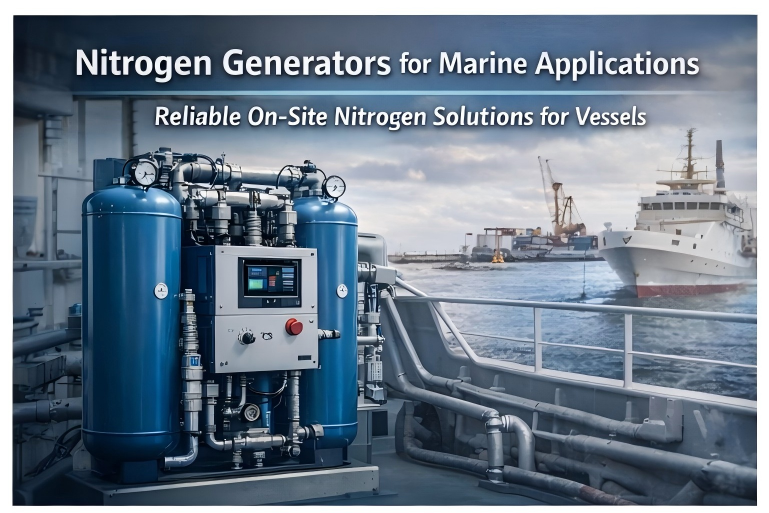
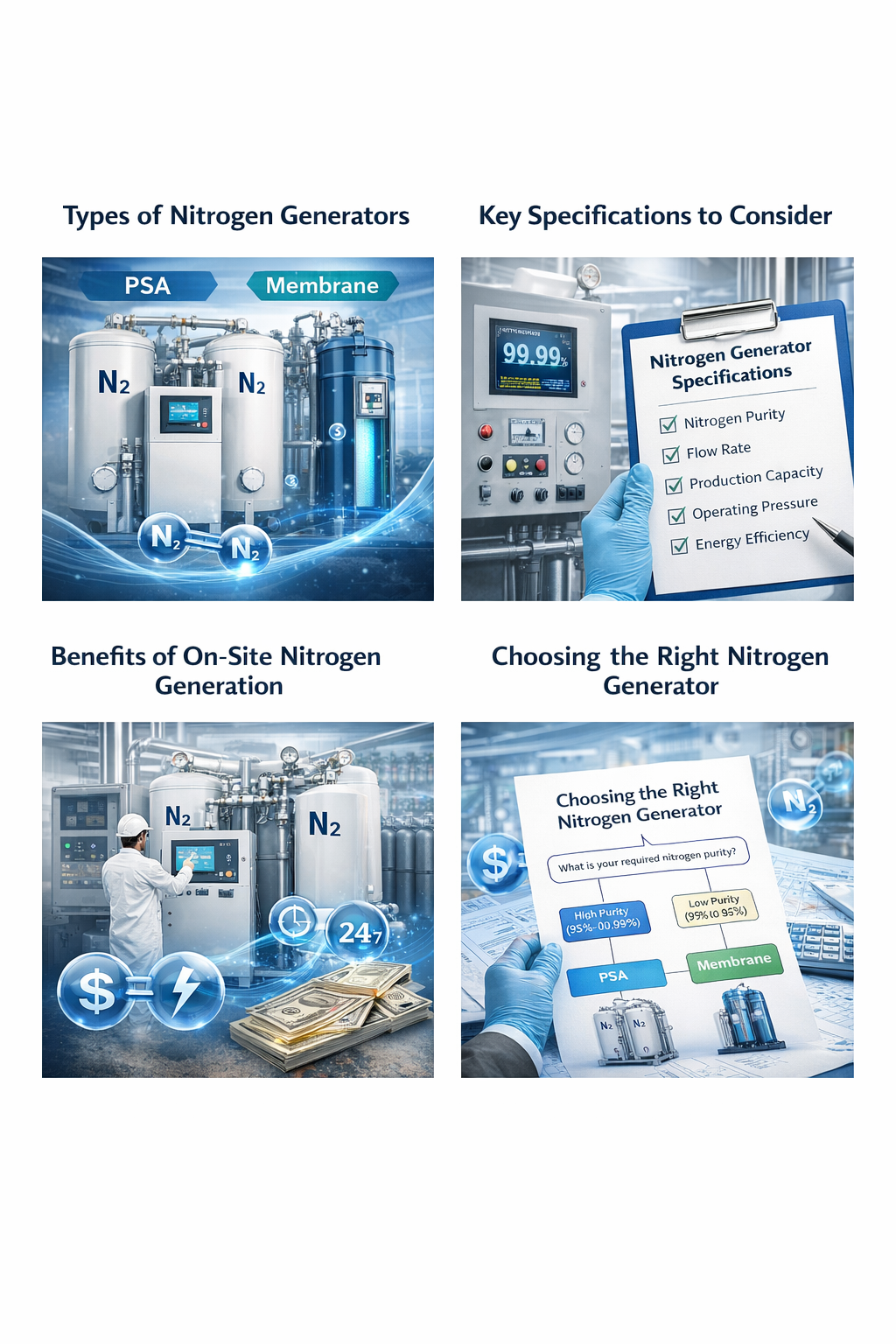
Most nitrogen generators use one of two technologies:
PSA Nitrogen Generators
PSA stands for Pressure Swing Adsorption. These systems use carbon molecular sieve to separate nitrogen from compressed air by adsorbing oxygen, carbon dioxide, and other trace gases while allowing nitrogen to pass through.
PSA nitrogen generators are often selected when higher nitrogen purity is required.
Membrane Nitrogen Generators
Membrane nitrogen generators use selective membrane fibers to separate nitrogen from oxygen and other gases in compressed air. They are often compact, simple in design, and suitable for many marine applications where moderate nitrogen purity is acceptable.
The choice between PSA and membrane technology depends on the vessel’s nitrogen purity requirement, available space, operating conditions, and application purpose.
Why Nitrogen Is Important in Marine Operations
Nitrogen plays a critical role in many marine systems because it is an inert gas that helps reduce the presence of oxygen. By lowering oxygen levels, nitrogen helps prevent oxidation, reduce explosion risks, and improve operational safety.
On ships and offshore installations, nitrogen is commonly used to create inert atmospheres in tanks and enclosed systems. This is especially important when handling flammable liquids, chemicals, fuels, or sensitive cargo.
Nitrogen is also valuable for protecting pipelines, maintaining pressure in certain systems, and preventing internal corrosion caused by moisture and oxygen exposure. In marine environments, where corrosion is a constant concern, the use of nitrogen can help improve equipment life and reduce maintenance problems.
Because of these benefits, nitrogen generators marine systems are now widely regarded as practical and efficient equipment for modern maritime operations.
Main Applications of Nitrogen Generators in the Marine Industry
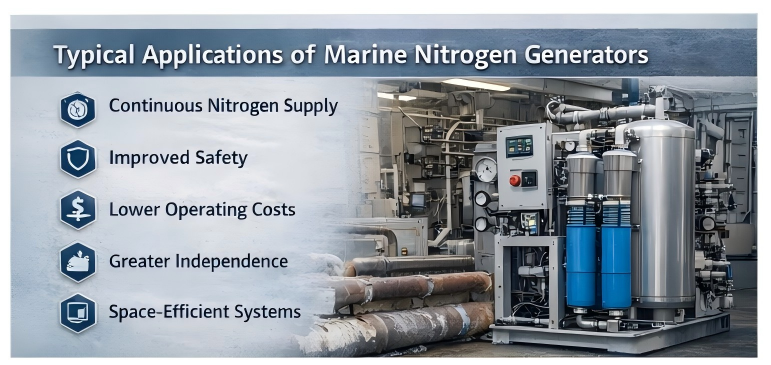
Marine nitrogen generators can be used in a wide range of shipboard and offshore applications.
Tank Inerting
One of the most common uses of nitrogen in marine operations is tank inerting. Nitrogen is used to displace oxygen in cargo tanks, fuel tanks, and storage tanks, helping reduce the risk of fire and explosion.
This is especially important for tankers, chemical carriers, and offshore vessels handling volatile substances.
Pipeline Purging
Nitrogen is used to purge pipelines before commissioning, maintenance, or shutdown procedures. This helps remove oxygen, moisture, and residual gases from the system, improving safety and cleanliness.
Pressure Holding and Blanketing
Nitrogen can be used to maintain protective pressure in tanks and enclosed systems. This helps prevent contamination from outside air and reduces oxidation risks.
Fire Prevention and Safety Support
Because nitrogen lowers oxygen concentration, it can support fire prevention strategies in certain marine environments and process systems.
Corrosion Reduction
By limiting oxygen and moisture exposure, nitrogen helps reduce internal corrosion in tanks, pipelines, and protected systems. This is valuable in offshore and marine settings where corrosion control is a constant priority.
Support for Offshore and Specialized Marine Operations
Nitrogen is also used in offshore drilling support, maintenance activities, testing procedures, and special marine engineering applications where clean, dry, inert gas is needed.
Benefits of Using Marine Nitrogen Generators
Installing a nitrogen generator on board offers several important advantages compared with traditional nitrogen supply methods.
1. On-Site Nitrogen Production
The most obvious benefit is the ability to generate nitrogen directly on site. This removes dependence on external gas deliveries and allows operators to produce nitrogen whenever needed.
2. Improved Operational Safety
Nitrogen helps reduce oxygen concentration in critical areas, which lowers the risk of combustion, oxidation, and explosion in many marine applications.
3. Lower Operating Costs
Compared with repeated cylinder replacement or bulk gas supply, on-site nitrogen generation can significantly reduce long-term operating costs, especially for vessels with regular nitrogen demand.
4. Greater Convenience and Independence
Marine operations often take place far from shore-based supply points. A built-in nitrogen generator provides more flexibility and avoids the logistical complications of storing and transporting gas cylinders.
5. Space Efficiency
Marine systems are usually designed with compact layouts in mind. Modern nitrogen generators can be integrated into vessel systems efficiently, making better use of limited onboard space than large quantities of stored gas.
6. Consistent and Reliable Supply
A properly designed marine nitrogen generator provides a stable nitrogen source for continuous or repeated use. This helps support smoother daily operation and better system reliability.
Why Marine Conditions Require Specialized Nitrogen Generator Design
Marine environments are more demanding than many land-based industrial settings. Equipment installed on vessels or offshore units must withstand vibration, movement, humidity, salt exposure, and varying temperatures.
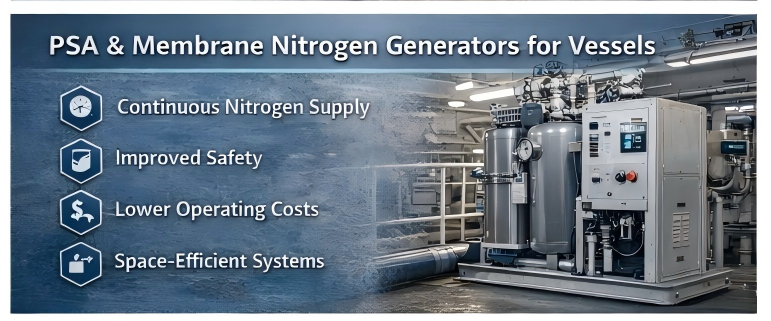
For this reason, nitrogen generators for marine applications are usually designed with specific considerations such as:
- Compact structure for limited installation space
- Corrosion-resistant materials or protective finishes
- Stable performance under harsh operating conditions
- Reliable control systems for continuous operation
- Easy maintenance access for onboard servicing
- Integration with marine compressed air systems and safety requirements
A marine nitrogen generator is not simply a standard industrial system placed on a ship. It should be designed or configured to suit the real needs of maritime operation.
PSA vs. Membrane Nitrogen Generators for Marine Use
Both PSA and membrane systems are used in marine applications, but each has its own strengths.
PSA Systems
PSA nitrogen generators are suitable when higher nitrogen purity is required. They are often preferred for applications where nitrogen quality is especially important.
Membrane Systems
Membrane nitrogen generators are often valued for their compact design, continuous operation, and lower mechanical complexity. They are commonly used where moderate purity is sufficient and where simplicity is a major advantage.
The right choice depends on the vessel type, application, purity requirement, available utilities, and operating priorities.
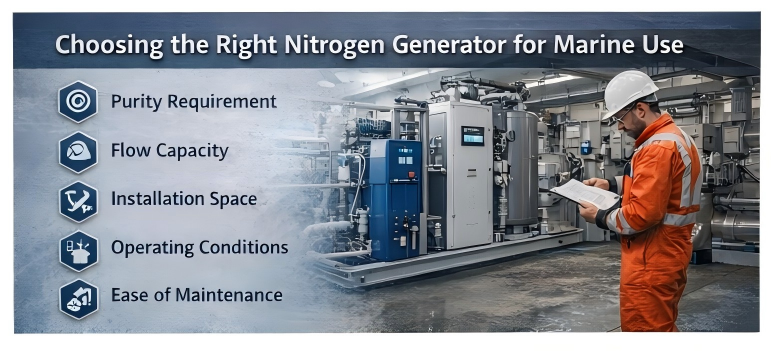
How to Choose the Right Nitrogen Generator for Marine Applications
Selecting the correct system requires a clear understanding of operational needs. Several factors should be evaluated.
Required Nitrogen Purity
Different applications need different purity levels. Tank inerting, purging, and blanketing may have different nitrogen quality requirements.
Flow Capacity
The nitrogen generator must provide enough output to meet peak and normal demand.
Installation Space
Space is often limited on ships and offshore platforms, so equipment size and layout are important considerations.
Operating Environment
Marine conditions such as humidity, salt-laden air, vibration, and temperature variation should be considered during equipment selection.
Automation and Control
A reliable marine nitrogen generator should offer easy monitoring and stable automatic operation to support onboard efficiency.
Maintenance Requirements
The system should be designed for practical maintenance, especially where access to technical support may be limited during voyages.
Supplier Experience
Choosing a manufacturer with experience in nitrogen generation and industrial air systems can help ensure long-term reliability, better support, and more suitable system design.
The Importance of a Complete On-Board Gas Generation Solution
A nitrogen generator works best when it is integrated into a complete and well-designed onboard system. In most cases, the full solution may include:
- Air compressor
- Air receiver tank
- Pre-filtration system
- Nitrogen generator
- Nitrogen buffer tank
- Monitoring and control system
- Air and gas treatment components
- Distribution piping and safety devices
When these components are properly matched, the result is a safer, more efficient, and more reliable nitrogen supply system for marine use.
Conclusion
Nitrogen generators marine applications are becoming increasingly important as the maritime industry seeks safer, more efficient, and more independent onboard systems. Whether used for tank inerting, pipeline purging, pressure blanketing, or corrosion reduction, marine nitrogen generators provide a practical way to generate nitrogen directly on board without relying on traditional gas supply methods.
With the right design, marine nitrogen generators can improve safety, reduce operating costs, support continuous operation, and make vessel logistics more efficient. For ship owners, operators, and offshore service providers, on-site nitrogen generation is a smart investment in long-term reliability and operational performance.