Compressed air is often called the fourth utility in industry because it is used in so many daily operations. It powers pneumatic tools, supports automation systems, controls valves and instruments, and helps production lines run smoothly. However, many users still ask an important question: why does compressed air require a dryer?
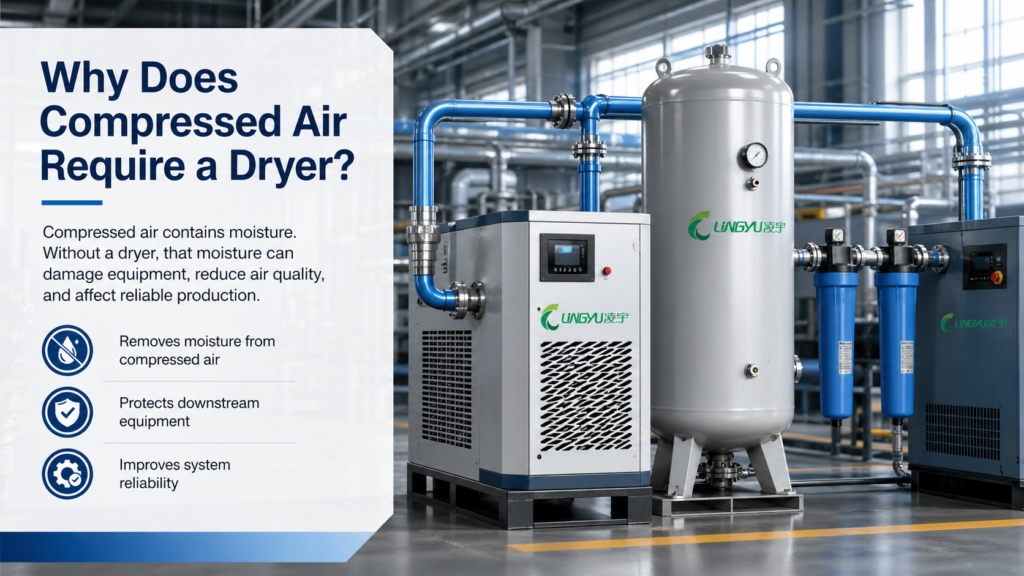
The answer is simple. Compressed air naturally contains moisture, and if that moisture is not removed, it can damage equipment, reduce product quality, increase maintenance costs, and create serious reliability problems. A compressed air dryer removes water vapor from the air before it reaches downstream equipment, helping the entire system operate more efficiently and safely.
Compressed Air Always Contains Moisture
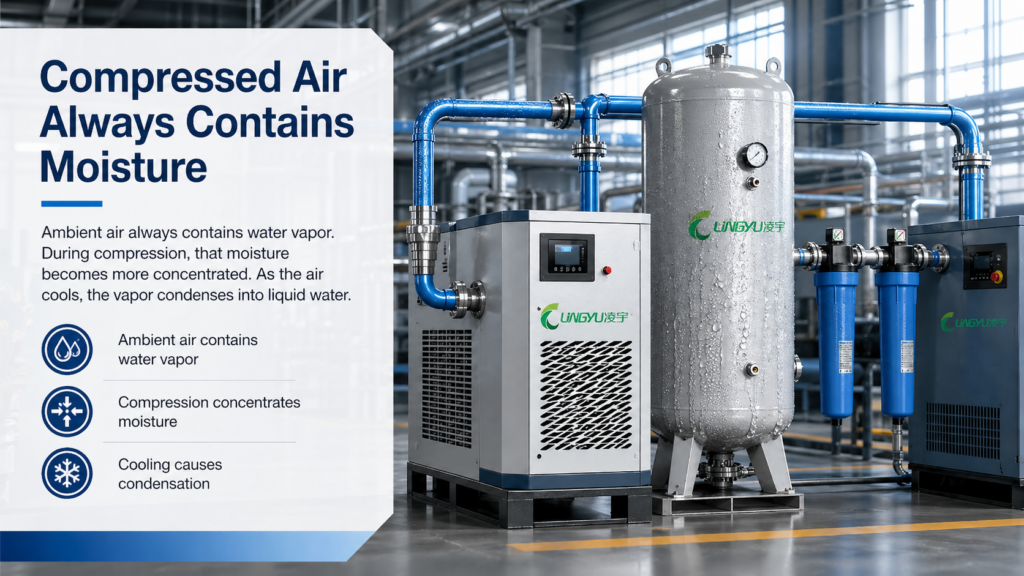
Atmospheric air is never completely dry. It always contains a certain amount of water vapor, and the amount depends on temperature, humidity, and the surrounding environment. When an air compressor draws in ambient air, it also draws in that moisture.
During compression, the air volume becomes smaller, but the amount of water vapor remains in the system. This means the moisture becomes more concentrated. As the compressed air cools, that vapor turns into liquid water. Without proper treatment, this moisture enters the piping network and spreads throughout the compressed air system.
That is the main reason why compressed air requires a dryer. The dryer removes this moisture before it can cause problems.
What Happens When Moisture Stays in Compressed Air
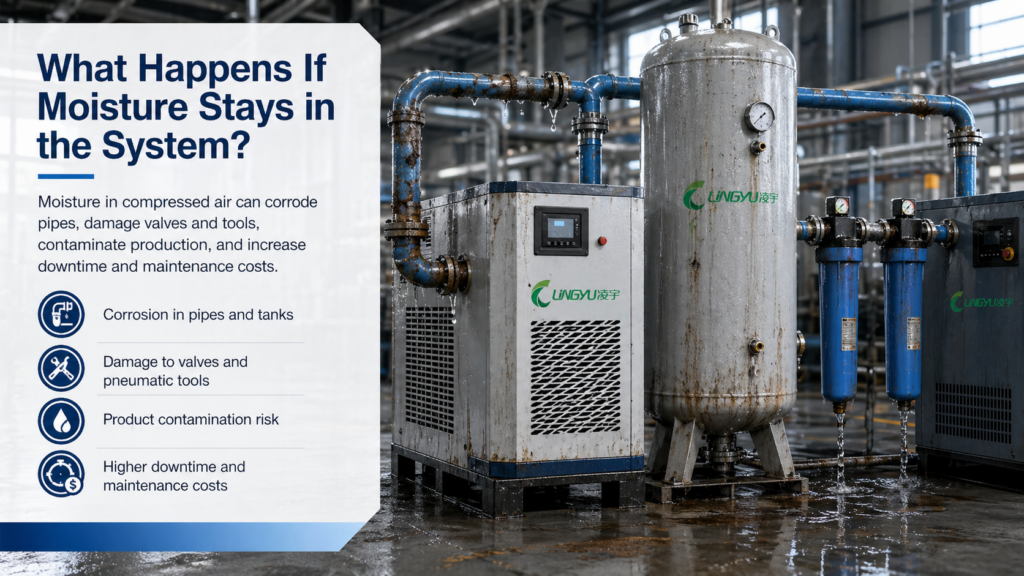
Moisture in compressed air may seem like a small issue at first, but in industrial applications it can create major operational risks.
Wet compressed air can cause internal corrosion in pipes, tanks, and fittings. It can damage valves, cylinders, pneumatic tools, and precision instruments. In automated systems, moisture may lead to unstable control performance or sticking components. In colder environments, it can even freeze inside pipelines and block airflow.
Moisture also affects product quality. In industries such as food processing, pharmaceuticals, electronics, textiles, and chemical manufacturing, contaminated or wet compressed air can interfere with production conditions and lead to defects, waste, or compliance problems.
This is why the question is not whether compressed air contains moisture. It does. The real question is how to remove that moisture effectively.
Why a Dryer Is Needed After Compression
An air compressor produces compressed air, but it does not guarantee dry air. Even when the compressor is equipped with an aftercooler or receiver tank, only part of the moisture can be separated at that stage. A significant amount of water vapor still remains in the air and continues moving through the system.
A dryer is needed because it lowers the dew point of compressed air. The dew point is the temperature at which water vapor condenses into liquid water. When the dew point is reduced, the air remains drier during storage, transmission, and use. This protects downstream equipment and supports stable operation.
In other words, compressed air requires a dryer because compression alone does not solve the moisture problem. It actually concentrates it.
The Main Benefits of Using a Compressed Air Dryer
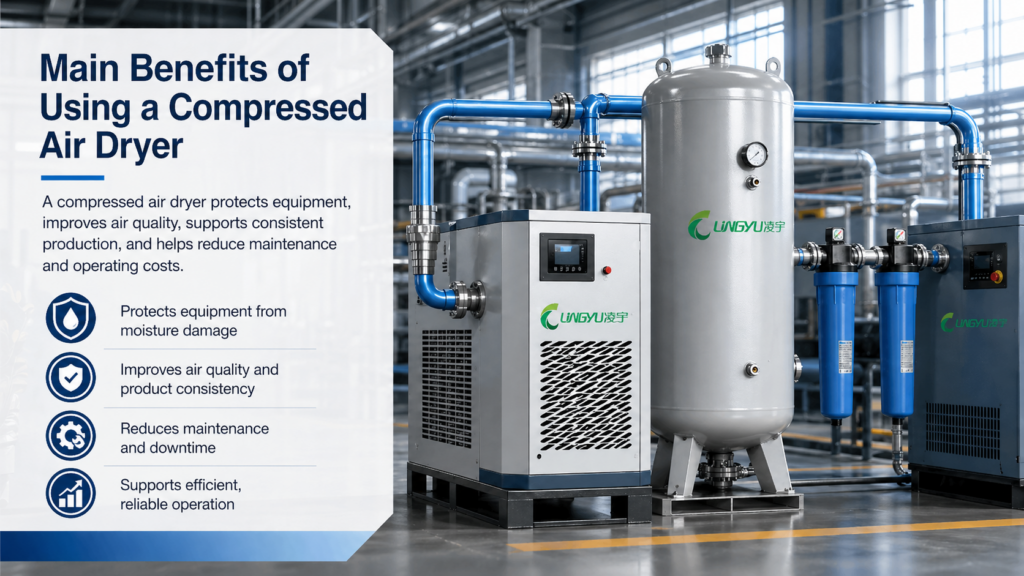
A compressed air dryer is one of the most important components in a complete air treatment system. It provides several direct benefits for industrial users.
First, it protects equipment. Dry air reduces rust, corrosion, and internal wear in valves, pipes, actuators, and pneumatic tools. This helps extend service life and reduce unplanned downtime.
Second, it improves production reliability. Moisture-free air allows automation systems and instruments to perform more consistently. This is especially important in precision manufacturing and continuous production environments.
Third, it supports better product quality. In many industries, air quality comes into direct or indirect contact with the production process. Dry air helps reduce contamination risk and improve process stability.
Fourth, it lowers maintenance costs. By preventing moisture-related problems before they happen, a dryer reduces repair frequency, replacement costs, and system interruptions.
Why Different Industries Need Dry Compressed Air
The need for dry compressed air varies by industry, but the importance is widespread.
In food and beverage production, dry compressed air helps maintain cleaner packaging and production conditions. In pharmaceutical manufacturing, reliable dry air supports process control and quality assurance. In electronics production, moisture can damage sensitive components and reduce manufacturing precision.
In automotive painting and coating systems, water in compressed air may affect surface finish and final appearance. In textile plants, moisture can influence product handling and machine reliability. In chemical processing, wet air may affect instrument performance and process consistency.
Even in general manufacturing, wet compressed air can shorten equipment life and reduce operational efficiency. This is why dryers are not only used in highly sensitive industries. They are valuable in almost any compressed air application.
How a Compressed Air Dryer Solves the Problem
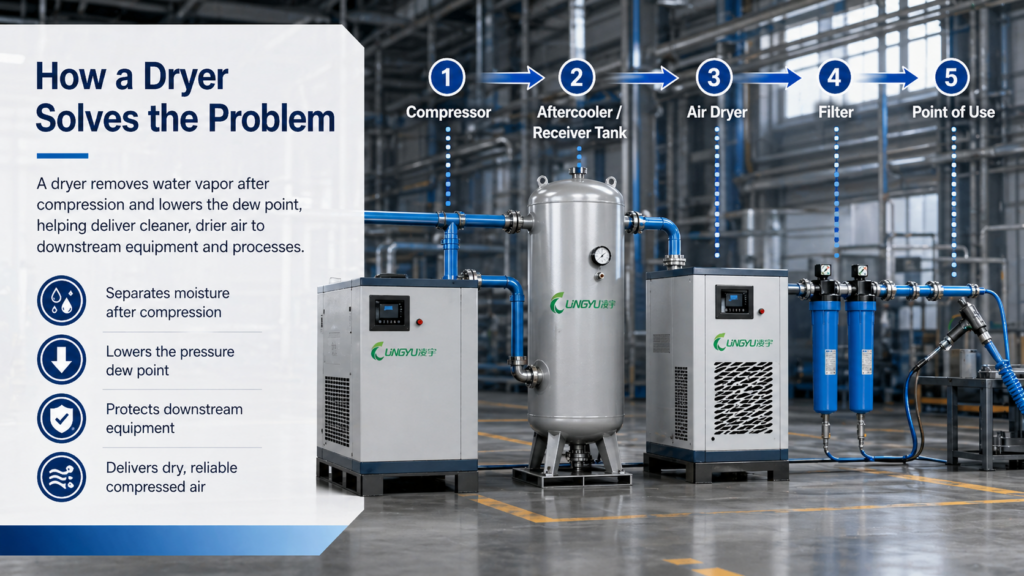
A compressed air dryer removes moisture from compressed air before it reaches the point of use. The exact method depends on the dryer type, but the goal is always the same: produce cleaner, drier, more reliable air.
In a typical system, the compressed air first leaves the compressor at a high temperature. It may then pass through an aftercooler or air receiver, where some of the moisture condenses and is removed. After that, the air enters the dryer, which removes additional water vapor much more effectively.
Once the air is dried to the required dew point, it can be distributed more safely throughout the plant. This is why a dryer is not a secondary accessory. It is a critical part of proper compressed air treatment.
Refrigerated Dryers and Why They Are Commonly Used
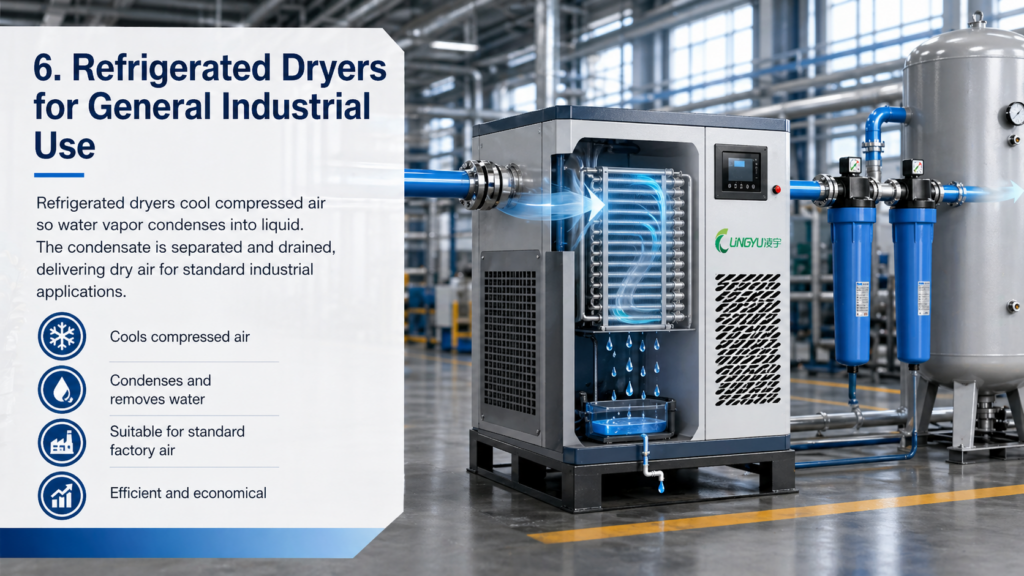
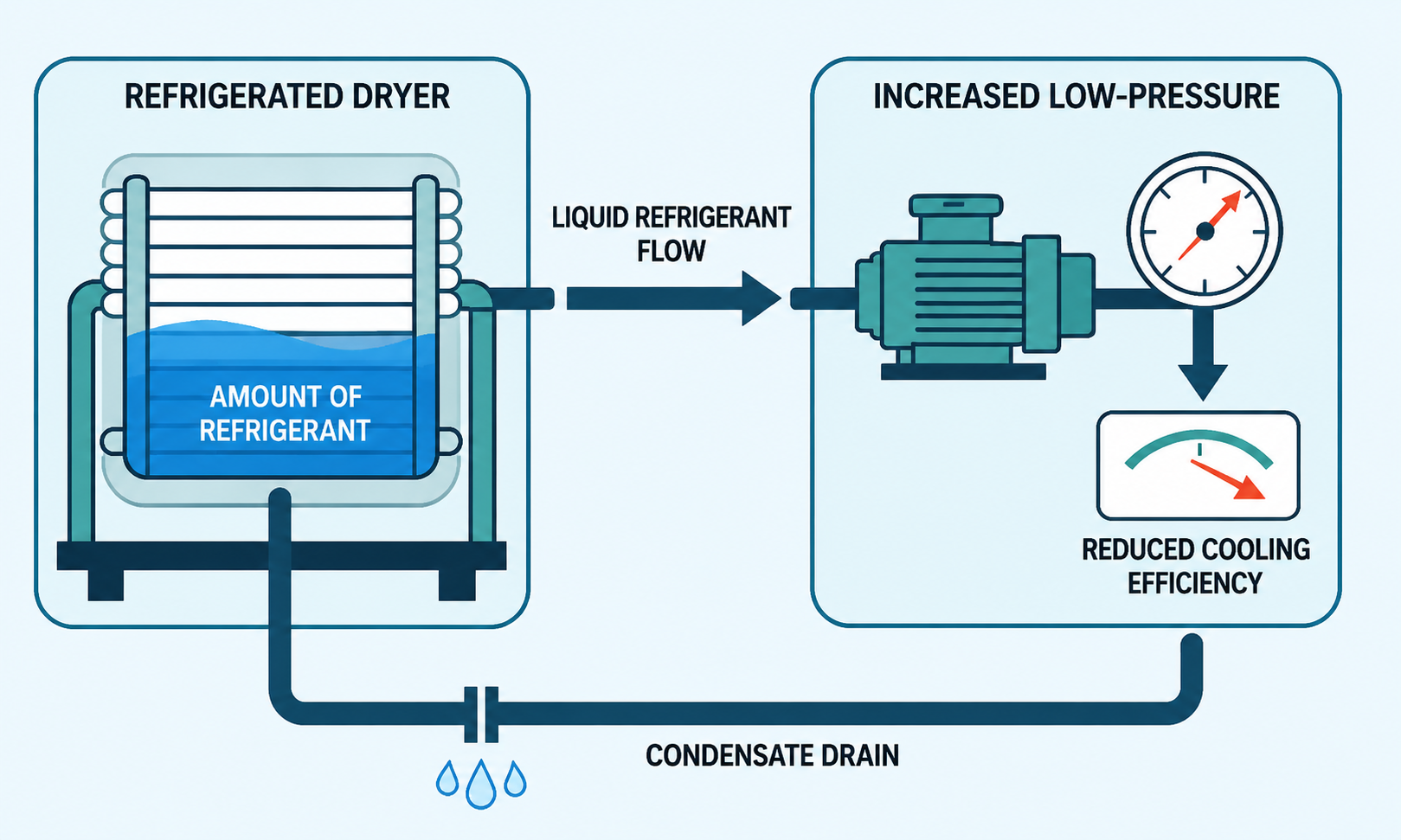
A refrigerated air dryer works by cooling compressed air to a low temperature so that water vapor condenses into liquid. The liquid condensate is then separated and drained from the system. The result is dry air with a moderate dew point, usually suitable for general industrial use.
This type of dryer is widely used because it is efficient, reliable, and economical for many factory environments. It is often the preferred solution when the application does not require an extremely low dew point.
For many users asking why compressed air requires a dryer, a refrigerated dryer provides the most practical answer in standard production systems. It offers a good balance between drying performance, operating cost, and simplicity.
Desiccant Dryers for Lower Dew Point Requirements
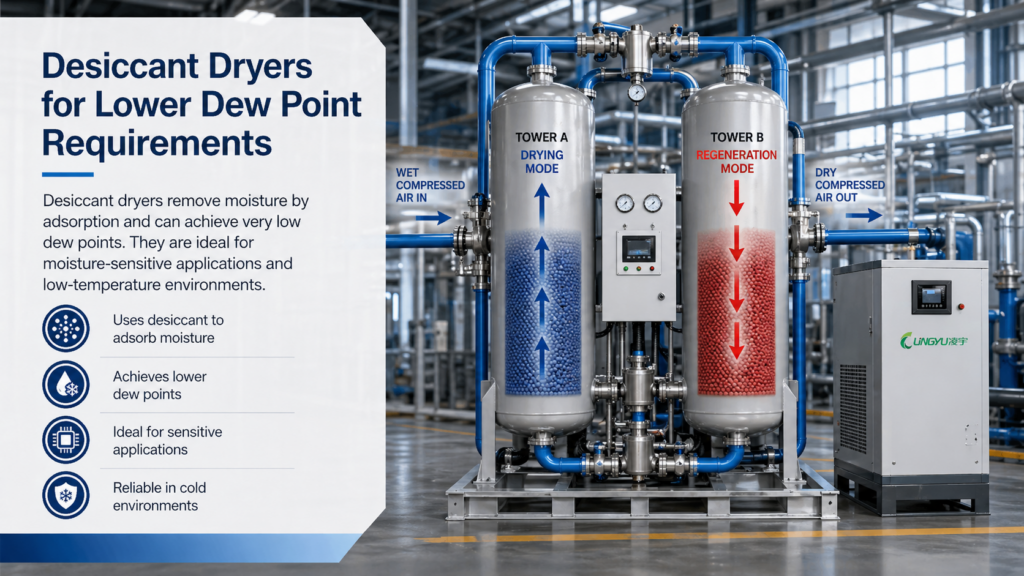
Some applications require much drier air than a refrigerated dryer can provide. In those cases, a desiccant dryer is used.
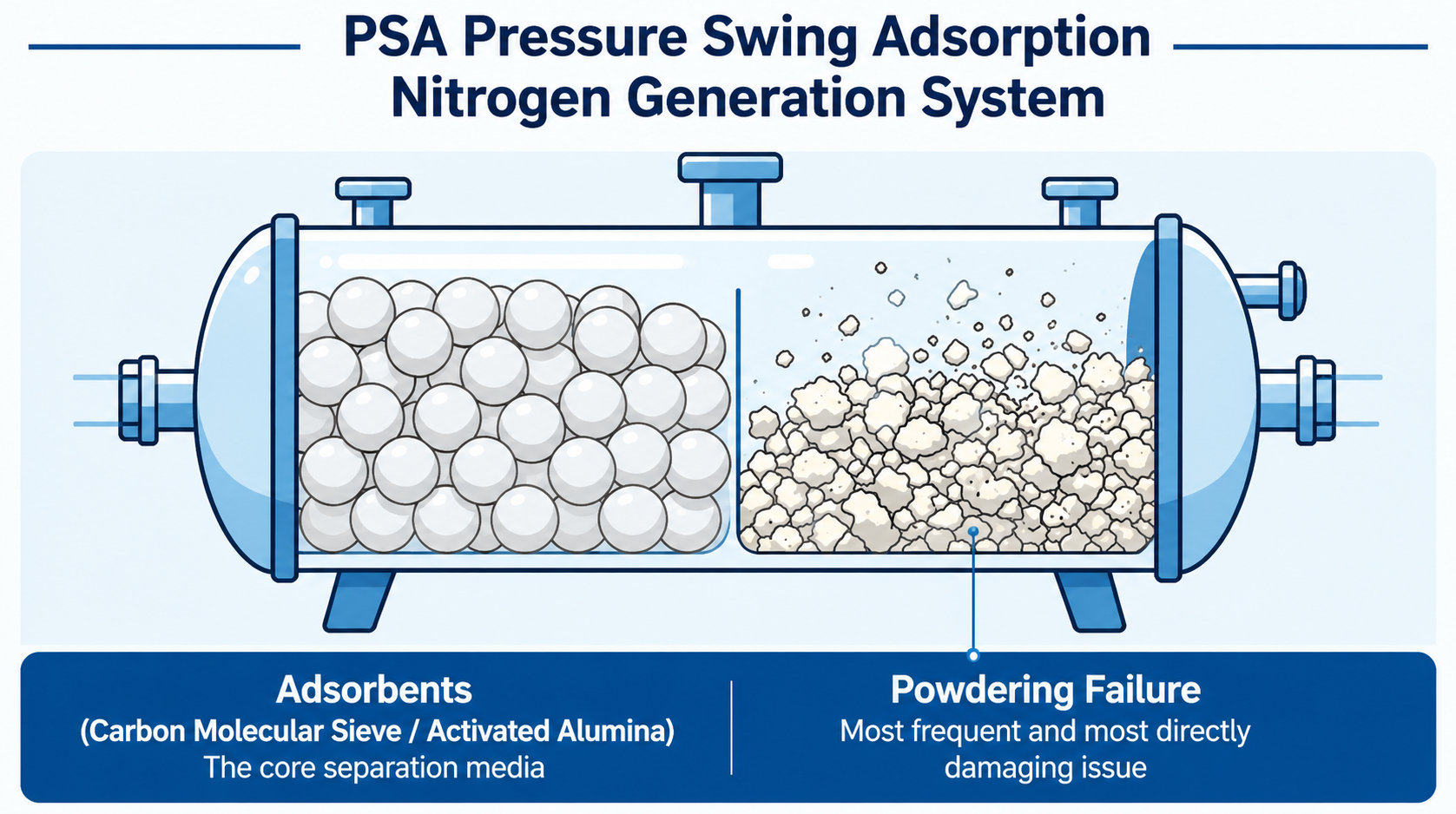
A desiccant dryer removes moisture through adsorption. Compressed air passes through a desiccant material such as activated alumina or molecular sieve, which captures water vapor from the air. These dryers can achieve very low pressure dew points, such as -40°C or even lower.
Desiccant dryers are commonly used in industries where moisture must be controlled more strictly, including pharmaceuticals, electronics, laboratories, precision instruments, and cold-climate installations.
This explains another important part of the question. Compressed air requires a dryer not only because moisture exists, but also because different applications require different levels of dryness.
A Dryer Helps Protect the Entire Air System
Many users focus only on the air compressor, but the performance of a compressed air system depends on all downstream components as well. A dryer helps protect the entire network, including air receivers, filters, piping, regulators, valves, actuators, tools, and end-use machines.
Without a dryer, moisture moves through the full system and affects everything along the way. The damage may appear slowly through corrosion and efficiency loss, or suddenly through equipment malfunction and contamination.
By installing the right dryer, companies create a more stable foundation for the entire compressed air infrastructure.
How to Know Whether a Dryer Is Necessary
In practice, most industrial compressed air systems need a dryer. The real decision is not whether drying is needed, but what type of dryer is most suitable.
A dryer becomes especially important when the compressed air system serves automation equipment, precision control devices, packaging lines, paint processes, moisture-sensitive products, or cold environments. It is also important when the system operates continuously and downtime is costly.
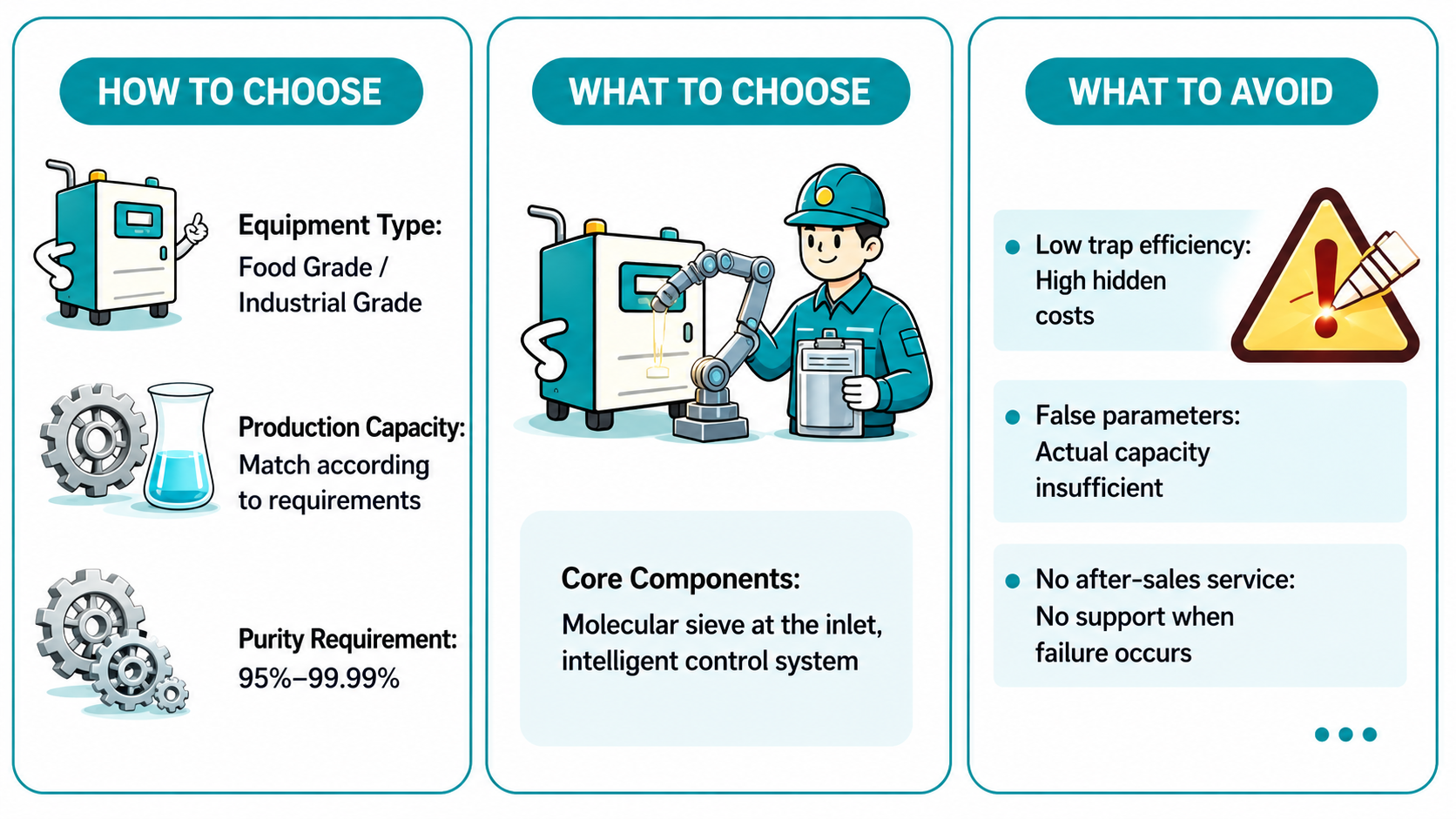
The required dew point, airflow, inlet temperature, working pressure, ambient conditions, and air quality standard all influence dryer selection. These factors should be evaluated carefully to choose the right solution.
A Complete Air Treatment System Works Best
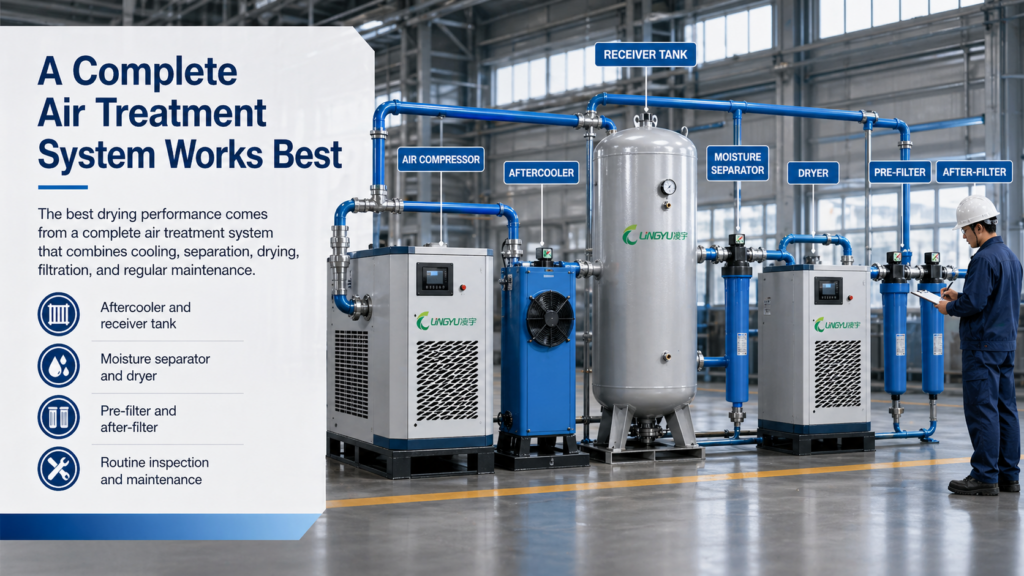
A dryer performs best when it is installed as part of a complete compressed air treatment system. This may include an aftercooler, air receiver tank, moisture separator, pre-filter, dryer, after-filter, and automatic drain.
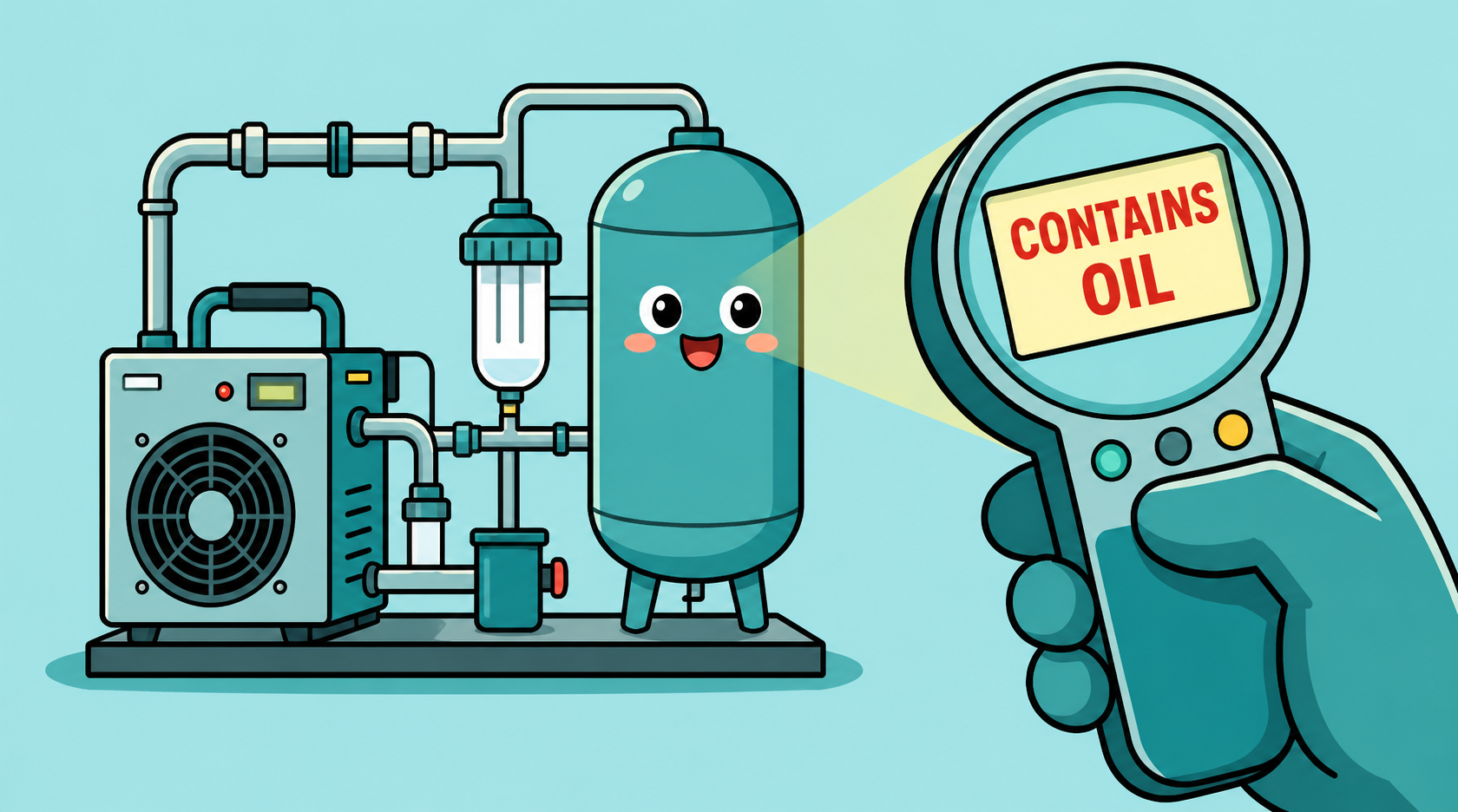
Pre-filtration is important because oil aerosols, dirt, and liquid water can reduce dryer performance and shorten equipment life. Post-filtration may also be needed to protect sensitive downstream applications.
When these components work together, the system can deliver cleaner, drier, and more dependable compressed air.
Conclusion
So, why does compressed air require a dryer? Because compressed air always contains moisture, and that moisture can damage equipment, reduce efficiency, affect product quality, and create costly downtime. Compression increases the concentration of water vapor, and cooling causes that vapor to condense. Without a dryer, the system remains vulnerable to moisture-related problems.
A compressed air dryer removes that moisture, lowers the dew point, and helps protect the entire air system. Whether the application uses a refrigerated dryer or a desiccant dryer, the purpose is the same: to provide clean, dry, and reliable compressed air for stable industrial operation.
For any company that depends on compressed air, a dryer is not just an optional accessory. It is a necessary step toward better performance, longer equipment life, and more consistent production.