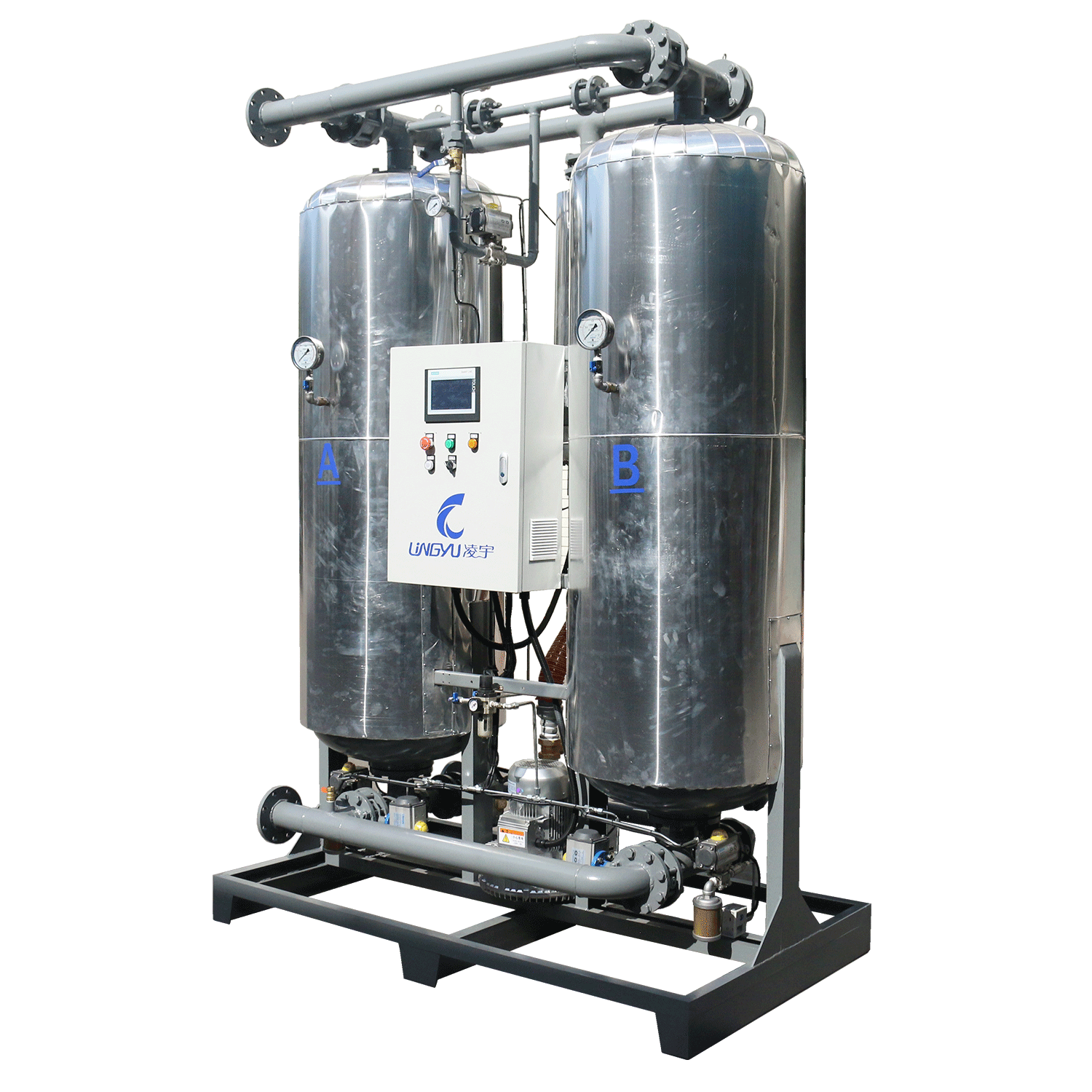
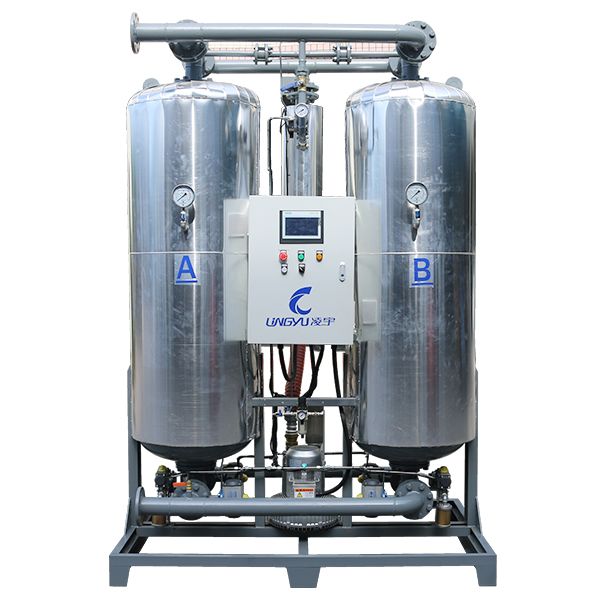
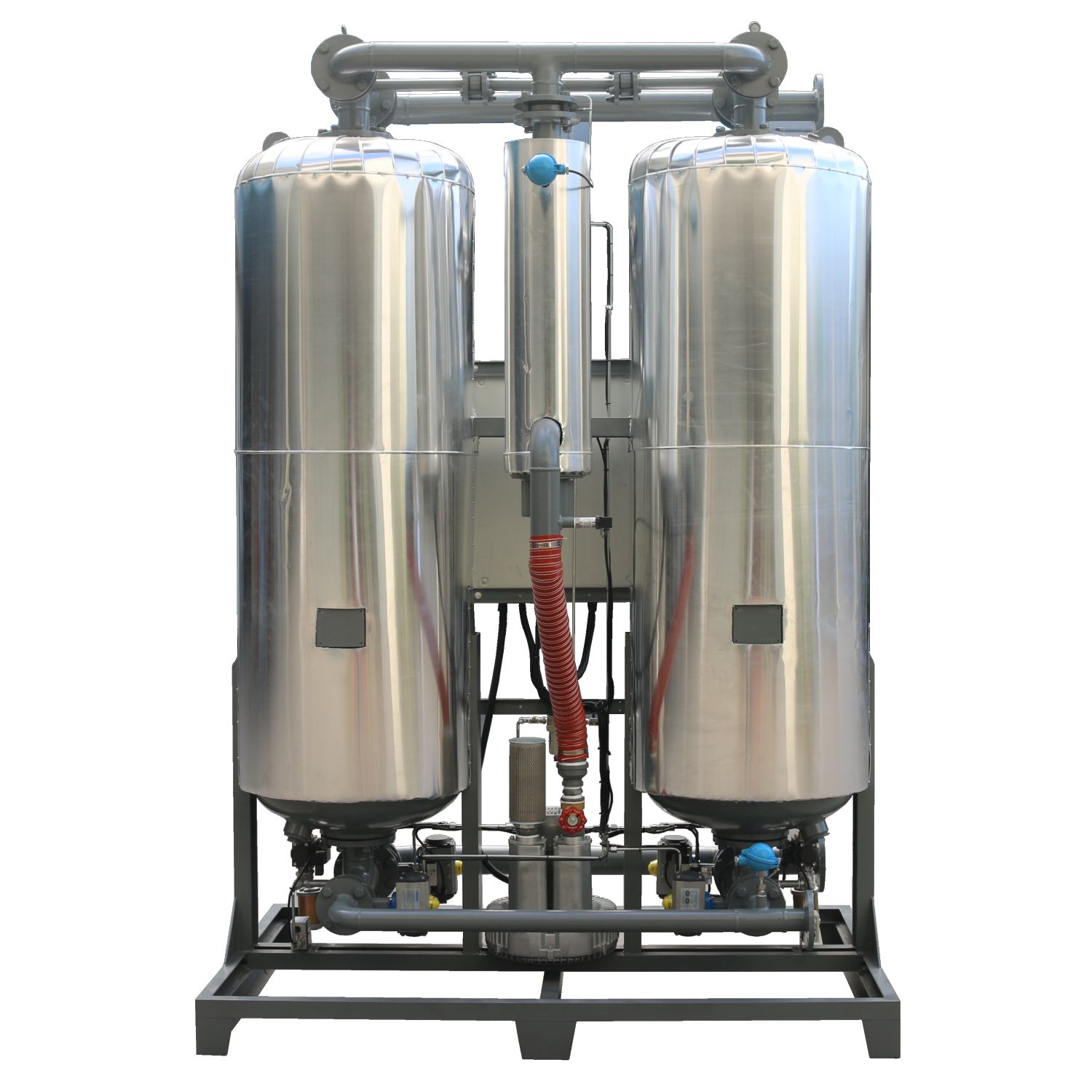
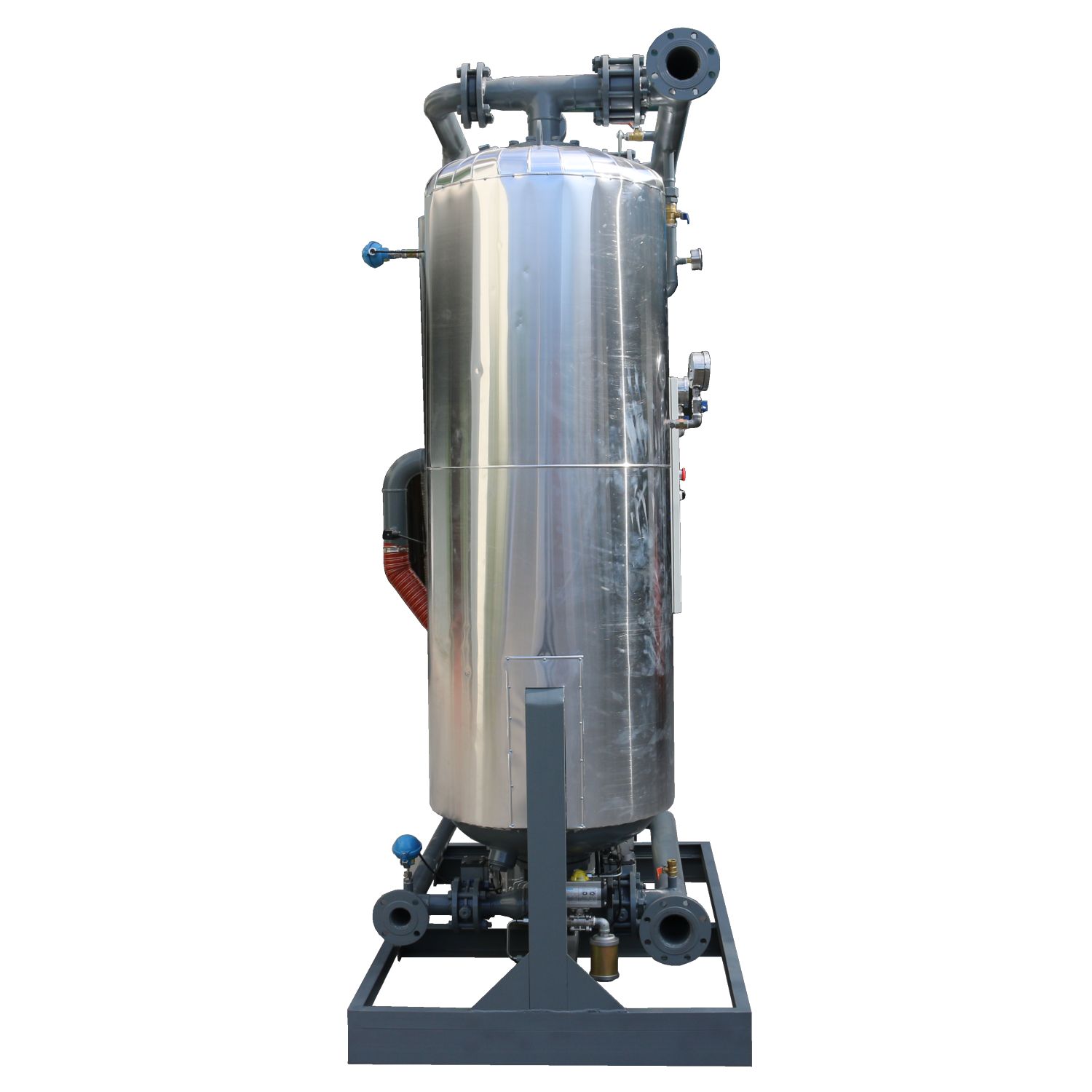
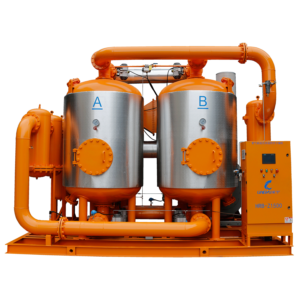
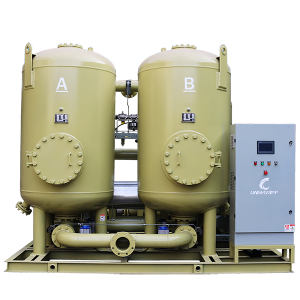
The stainless steel blast heating regeneration adsorption dryer is designed for compressed air systems that require ultra-dry, oil-free, and energy-efficient air treatment. It is an upgraded version of the micro-gas-consumption blast heat regeneration adsorption dryer, featuring an additional intermediate cooler to improve regeneration efficiency and overall drying performance.
During operation, ambient air is drawn in by a blower and heated by a built-in heater. The heated air then passes through the saturated adsorption tower, desorbing the moisture accumulated in the adsorbent. After the heating stage, the hot regeneration air circulates through the intermediate cooler and the regeneration tower, cooling the tower in a continuous closed-loop cycle.
Because the full regeneration process is completed without consuming compressed air, the system achieves zero compressed air consumption during regeneration, helping reduce energy use and operating costs. By combining TSA (Temperature Swing Adsorption) technology with blower thermal purge regeneration, the dryer delivers reliable moisture removal, stable dew point performance, and efficient long-term operation.
To ensure stable performance and long service life, the stainless steel blast heating regeneration adsorption dryer should be used under the following recommended conditions:
- Applicable fluid: Compressed air, non-corrosive air
- Inlet air flow: 28.5 Nm³/min (1710 Nm³/h)
- Inlet air pressure: Standard 7 bar, range 6–10 bar
- Pressure loss at full load: ≤ 3% of intake pressure
- Inlet air oil content: Oil-free or ≤ 0.1 ppm (mg/m³)
- Inlet air temperature: Standard 10–30℃, range 2–40℃
- Outlet pressure dew point: ≤ -20℃
- Working environment temperature: Standard 35℃, range 2–40℃
- Working cycle (single tower): Approximately 240 minutes, maximum 300 minutes
For the best drying result, the system should be supplied with clean and stable compressed air. Proper pre-filtration and oil removal are recommended to protect the adsorbent, maintain drying efficiency, and ensure consistent outlet air quality.
| Model | Capacity (m³/min) | Gas Connection Pipe | Power (kW) | Dimensions (mm) |
|---|
| HRB-E100 | 13.5 | DN50 | 7.5 | 1390×970×2297 |
| HRB-E120 | 17 | DN65 | 10.2 | 1750×1050×2271 |
| HRB-E150 | 21.5 | DN80 | 11.8 | 1750×1050×2471 |
| HRB-E180 | 25 | DN80 | 14.2 | 1800×1050×2597 |
| HRB-E200 | 28.5 | DN80 | 16.8 | 1900×1100×2454 |
| HRB-E250 | 32 | DN80 | 18.4 | 1920×1260×2600 |
| HRB-E300 | 37 | DN100 | 21.5 | 2175×1340×2750 |
| HRB-E350 | 41.5 | DN100 | 25.9 | 2200×1350×2752 |
| HRB-E400 | 45 | DN100 | 27.5 | 2400×1500×2852 |
| HRB-E450 | 50 | DN100 | 30 | 2540×1670×2938 |
| HRB-E500 | 55 | DN125 | 31.5 | 2650×1700×3138 |
| HRB-E550 | 60 | DN125 | 33.5 | 2700×1840×3150 |
| HRB-E600 | 65 | DN125 | 36.3 | 2750×1840×2888 |
| HRB-E700 | 75 | DN125 | 41.1 | 2750×1840×2888 |
| HRB-E800 | 85 | DN125 | 47.8 | 3100×1900×3050 |
| HRB-E900 | 95 | DN150 | 52.6 | 3250×2100×2950 |
| HRB-E1000 | 110 | DN150 | 59 | 3250×2100×2950 |
| HRB-E1200 | 120 | DN150 | 63.8 | 3500×2200×3341 |
| HRB-E1400 | 140 | Dn200 | 74.1 | 3700×2400×3420 |
| HRB-E1600 | 160 | DN200 | 89 | 3900×2420×3500 |
| HRB-E1800 | 180 | DN200 | 98.5 | 4100×2200×3050 |
| HRB-E2100 | 210 | DN200 | 110.5 | 4200×2835×3150 |
| HRB-E2600 | 260 | DN250 | 136.4 | 5200×2500×3300 |
Note:For air volumes above 260 m³/min or special specifications (materials, temperature, or pressure), please contact our company or authorized dealers. Data is for reference only and may change without prior notice.
The stainless steel blast heating regeneration adsorption dryer is well suited for Middle East industrial environments that require clean utility air, corrosion-resistant equipment, and lower long-term compressed air loss. In regional operating conditions that may include high temperatures, airborne dust, severe water scarcity, and in some coastal areas higher humidity and corrosive exposure, stainless steel construction and zero purge regeneration offer clear advantages for large industrial and hygienic utility air systems. It is especially suitable for sectors such as food processing, pharmaceutical manufacturing, water treatment, desalination, petrochemical utilities, and clean industrial production areas.
Recommended Applications
- Food and Beverage Processing, Filling, and Packaging Utilities – Suitable for hygienic utility air systems in production areas that require easy cleaning and stable dry air
- Pharmaceutical Manufacturing and Hygienic Utility Air Systems – Support clean compressed air for production support, packaging, and controlled utility environments
- Medical Device Production and Clean Utility Air Applications – Provide dry compressed air in manufacturing areas with higher cleanliness requirements
- Water Treatment, Desalination, and Chemical Dosing Utility Areas – Ideal for utility air systems in corrosion-prone water infrastructure environments
- Petrochemical and Chemical Utility Air in Corrosion-Prone Environments – Suitable for supporting compressed air systems where corrosion resistance and stable air quality are important
- Coastal Industrial Facilities Requiring Corrosion-Resistant Air Drying Equipment – A strong choice for sites exposed to humidity, salt, or aggressive cleaning conditions
- Electronics Assembly and Clean Process Support Air – Support dry compressed air for assembly and clean technical production areas
- Large Central Compressor Rooms Requiring Zero Purge Regeneration – Help reduce compressed air loss in large plant-wide air systems
- Clean Manufacturing Areas with Frequent Washdown Requirements – Improve durability and cleanability where stainless steel construction is preferred
- General Industrial Utility Air Systems Seeking Lower Compressed Air Loss – Suitable for plants that want dependable drying with improved operating efficiency
Application Note for the Middle East
For Middle East projects, this model is best positioned where the site requires a combination of corrosion resistance, hygienic construction, lower compressed air loss, and stable drying performance. It is especially suitable for coastal facilities, food and pharmaceutical plants, desalination and water treatment projects, and large utility air systems. Proper pre-filtration and oil removal remain important, because the dryer is intended to work with clean inlet air rather than replace upstream oil-removal protection.
Explore More Industry Applications