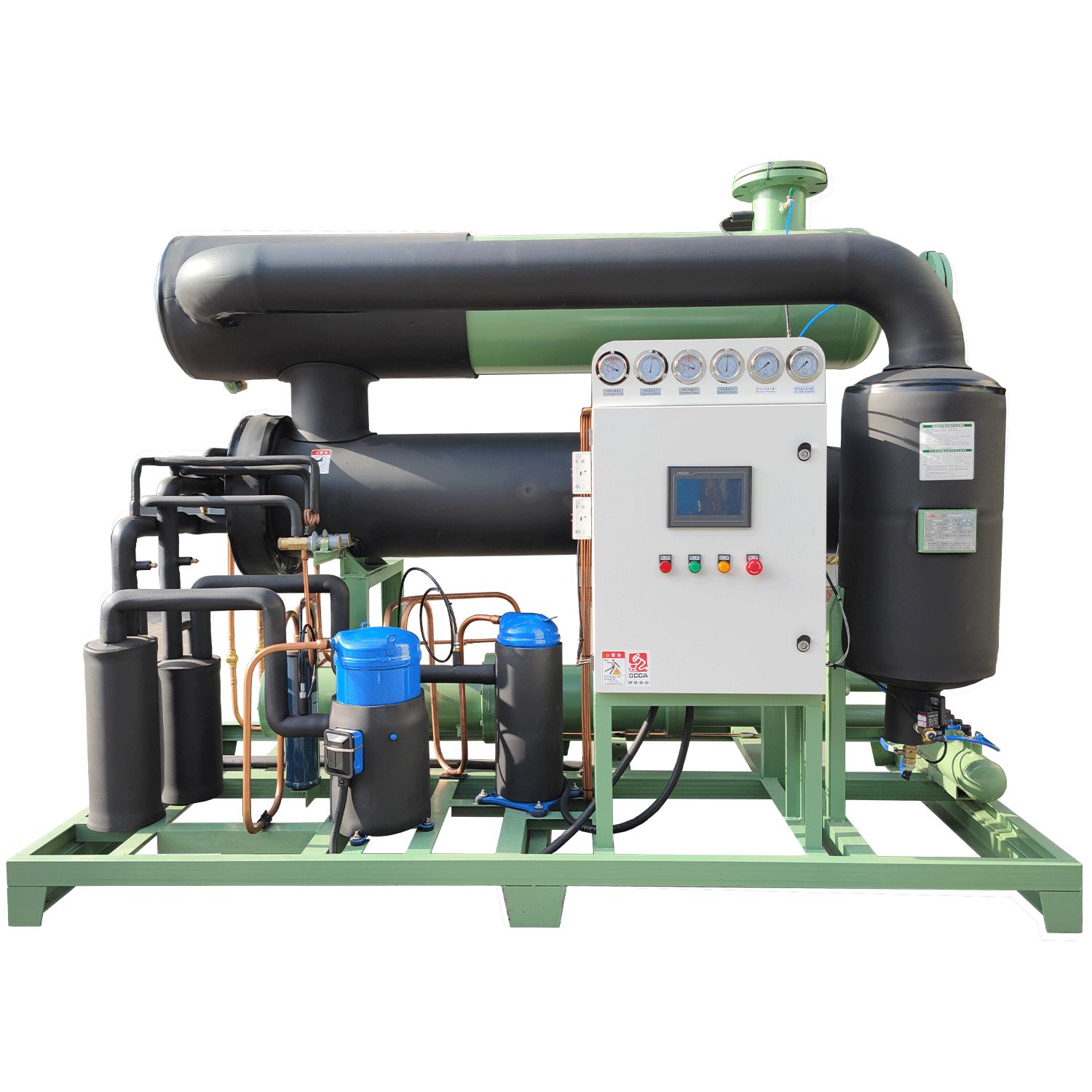
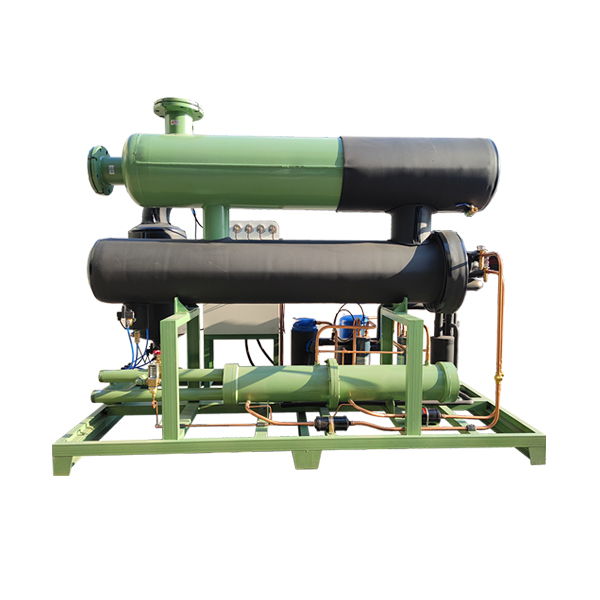
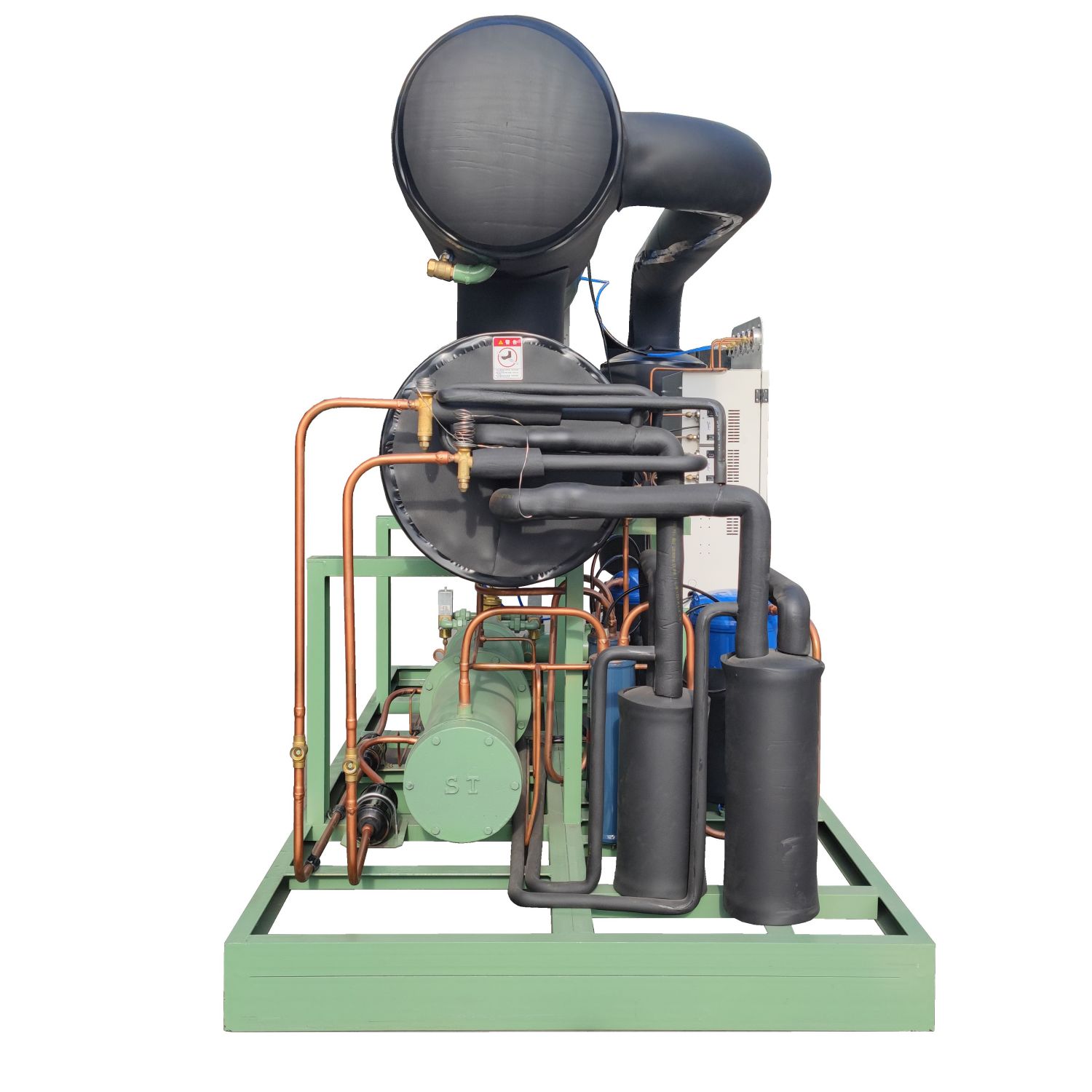
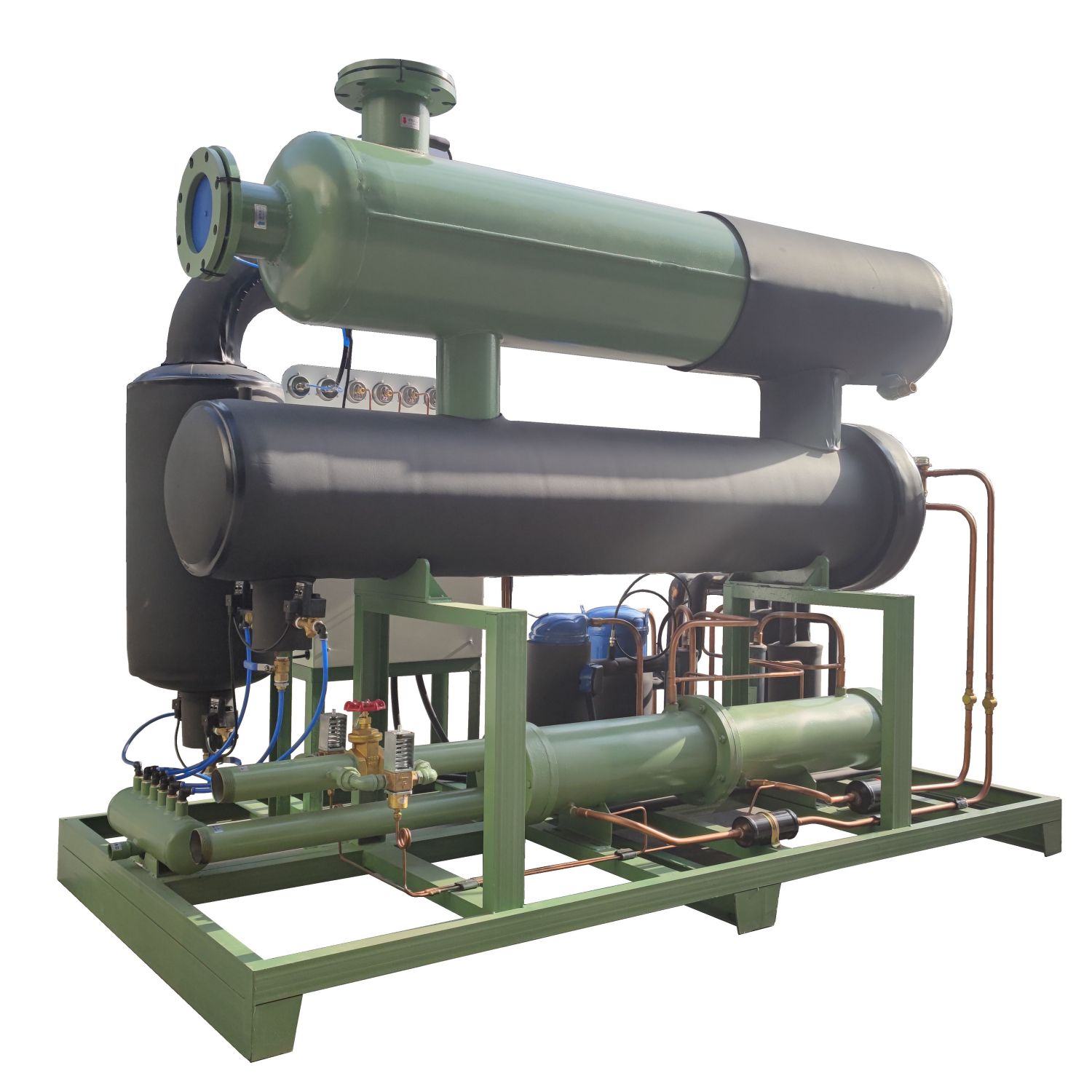
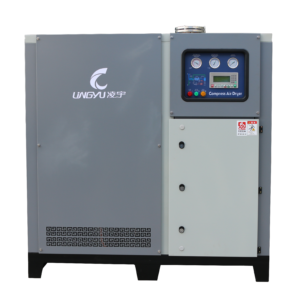
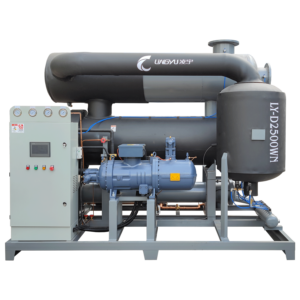
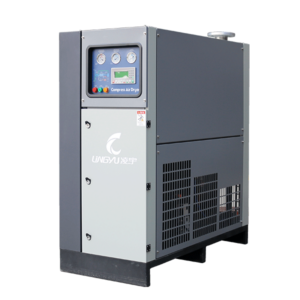
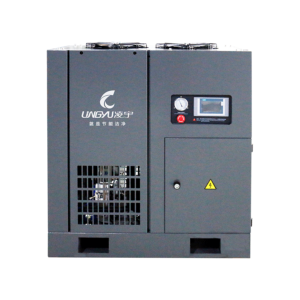
To ensure stable performance and long-term reliability, the 4238 CFM Water-Cooled Refrigerated Air Dryer should be used under the following recommended conditions:
- Inlet air pressure: 4–10 bar (58–145 psi)
- Inlet air temperature: ≤ 45°C (113°F)
- Ambient temperature: 5–45°C (41–113°F)
- Cooling water temperature: ≤ 32°C (89.6°F)
- Cooling water flow rate: 300–350 L/min
- Power supply: 380V / 3Ph / 50Hz, customizable
- Installation area: Indoor, clean, and well ventilated
- Recommended filters: Pre-filter + after-filter
For the best drying result, the dryer should be installed in a stable operating environment with proper cooling water supply and sufficient ventilation. Using pre-filtration and after-filtration is recommended to improve overall compressed air quality and help protect both the dryer and downstream equipment.
| Parameter | Specification |
|---|
| Model | 4238 CFM Water-Cooled Refrigerated Air Dryer |
| Air Flow Capacity | 4238 CFM |
| Cooling Method | Water Cooled |
| Max Operating Pressure | 10 bar |
| Pressure Dew Point | 2–10°C |
| Refrigerant | R407C / R134a |
| Power Supply | 380V / 3Ph / 50Hz |
| Water Connection | 1½” BSP |
| Air Connection | 5″ Flanged |
| Dimensions (L × W × H) | 2700 × 1600 × 2300 mm |
| Net Weight | 1050 kg |
This model combines high airflow handling, stable dew point performance, low pressure drop, and reliable long-term operation, making it suitable for demanding industrial compressed air systems.
The 4238 CFM Water-Cooled Refrigerated Air Dryer is well suited for large industrial compressed air systems in the Middle East, especially in facilities that require stable moisture removal, continuous-duty operation, and dependable cooling performance under hot operating conditions. In a region shaped by high ambient temperatures, dust exposure, water scarcity, and large-scale industrial infrastructure, this model is best positioned for major plants with established utility systems and reliable cooling water support, rather than for small general-purpose air installations.
Recommended Applications
- Petrochemical Processing and Chemical Utility Air Systems – Provide stable dry compressed air for plant utility air systems, valves, tools, and general process support
- Refineries and Large Central Utility Air Systems – Support continuous compressed air drying for plant-wide air distribution and long-duty operation
- Water Treatment and Desalination Facilities – Ideal for large utility plants where stable dry air and dependable cooling-water infrastructure are available
- Steel, Metals, and Heavy Processing Plants – Help reduce corrosion, condensation, and moisture-related wear in demanding industrial environments
- Large Manufacturing Plants and Central Compressor Rooms – Suitable for centralized compressed air systems serving multiple departments or production lines
- Textile, Plastics, and Continuous Production Facilities – Support stable utility air for long-running manufacturing operations
- Food and Beverage Processing and Packaging Utilities – Provide dependable dry compressed air for packaging, conveying, and general plant air systems
- Power Generation and Industrial Utility Plants – Support reliable plant air for utility equipment and central compressed air networks
- District Cooling and Large Building Utility Plants – Suitable for large support systems where dry compressed air is used in utility and service applications
- General Industrial Sites with Existing Cooling Water Infrastructure – A strong choice for facilities that can benefit from water-cooled heat dissipation in hot climates
Application Note for the Middle East
For Middle East installations, this model should be placed in an indoor, clean, and well-ventilated environment and matched with stable cooling water conditions. Because regional conditions often include heat extremes, dust exposure, and strong water constraints, this dryer is most suitable for large industrial plants, desalination and utility facilities, petrochemical sites, and central compressor systems that already operate established cooling-water infrastructure. Proper pre-filtration and after-filtration are strongly recommended to improve air quality and protect both the dryer and downstream equipment.
Explore More Industry Applications